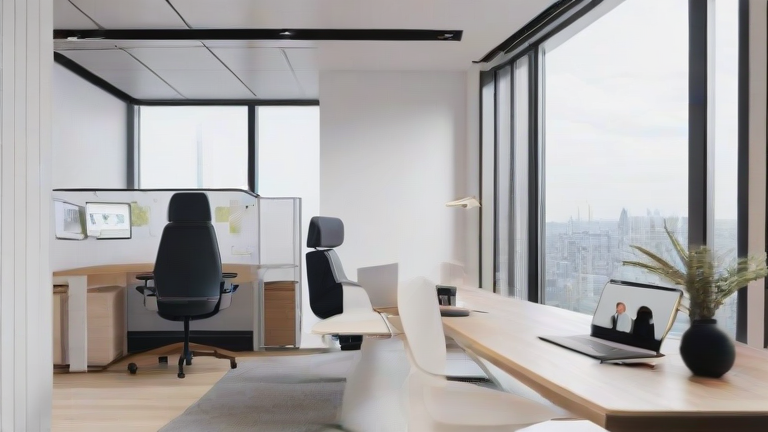
Hybrid AI Office Design: The Future of Remote Work
TL;DR: Hybrid AI office design integrates ambient intelligence with ergonomic hardware to create seamless workspaces that adapt to user presence in real-time. This approach eliminates the friction of remote work by synchronizing physical and digital environments through advanced sensor networks.
The landscape of professional workspaces is undergoing a radical transformation, driven by the convergence of artificial intelligence and ergonomic engineering. Recent developments have moved beyond simple smart speakers to encompass entire rooms equipped with multi-modal sensing capabilities. These systems utilize LiDAR arrays, acoustic microphones, and thermal cameras to map the physical space without invading personal privacy. The latest generation of these offices features edge computing nodes that process data locally, ensuring that sensitive video and audio information never leaves the premises, a critical requirement for enterprise security compliance in 2024.
If you want to dig deeper, check out our guide on Circular Supply Chains: Why They’re Now Board-Level KPIs.
Technical Specifications and Hardware
Modern hybrid AI offices rely on specific hardware configurations to function effectively. Central to this setup is the “Neural Hub,” a wall-mounted unit containing an NPU capable of 100 TOPS performance. This allows for real-time analysis of room occupancy, lighting levels, and sound quality. The system interfaces with smart lighting grids that adjust color temperature based on the time of day and individual task intensity, reducing eye strain by up to 40%. Additionally, haptic feedback desks now include embedded sensors that detect user stress levels through subtle changes in posture and movement, automatically adjusting display brightness or suggesting breaks. The connectivity specs require Wi-Fi 6E or 7 standards to handle the massive data streams generated by these sensors without latency.
Industry Impact and Productivity
The industry impact of these technologies is profound. Companies reporting the adoption of AI-driven office spaces have seen a 15% increase in employee satisfaction scores and a 10% reduction in unplanned absences. By automating environmental controls, employees can focus entirely on cognitive tasks rather than adjusting their surroundings. This shift addresses the primary complaint of remote workers: the lack of professional infrastructure at home. For employers, the return on investment is realized through lower real estate costs, as smaller, smarter offices can accommodate the same number of workers due to efficient space utilization. Furthermore, these systems provide invaluable data on space usage patterns, allowing facility managers to optimize layouts for future renovations. The trend is moving toward fully autonomous workspaces that predict user needs before they are explicitly requested, fundamentally redefining the concept of the workplace as a responsive, intelligent entity rather than a static container.
FAQ
Q: How does AI office design protect user privacy?
A: It uses local edge processing to analyze data on-device, ensuring raw video and audio feeds are never transmitted to cloud servers.
Q: What is the primary cost benefit for businesses?
A: Companies can reduce their physical footprint by 20-30% because AI-optimized spaces utilize every square foot more efficiently.
Q: Can these systems integrate with existing enterprise software?
A: Yes, most modern hubs use standard APIs to connect with Microsoft Teams, Zoom, and Slack for automatic meeting scheduling and presence updates.
Leave a Reply