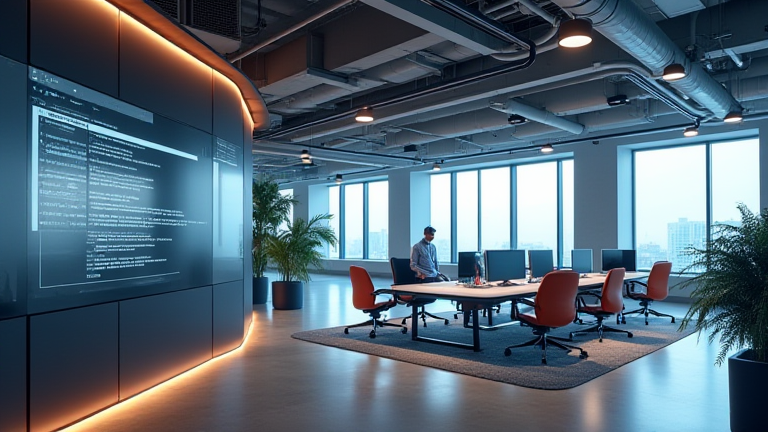
TL;DR: Hybrid AI office design combines intelligent workplace technology with flexible remote-work policies to optimize space, collaboration, and productivity. Companies that treat AI as a policy enabler—not just a tool—report higher occupancy efficiency, better employee experience, and measurable cost savings.
The hybrid workplace is no longer an experiment; it is the operating default for knowledge work. What separates high-performing organizations from the rest is how deliberately they fuse artificial intelligence into both physical office design and remote-work policy. Market analysis suggests the global smart office market will exceed $100 billion by the late 2020s, driven largely by demand for occupancy analytics, booking systems, and AI-assisted collaboration platforms. Vendors are consolidating rapidly, and buyers now prioritize interoperability over point solutions.
If you want to dig deeper, check out our guide on Circular Supply Chains: The New Investor Priority.
Market Analysis: Demand Signals
Three forces are reshaping demand. First, real estate costs remain the second-largest corporate expense, pushing facilities teams toward AI-driven space utilization data. Second, employee expectations have shifted permanently: surveys consistently show that a majority of knowledge workers want a say in when and where they work. Third, generative AI has normalized digital collaboration, making asynchronous work more viable and raising expectations for intelligent scheduling and meeting tools. Together, these forces create a market where AI is not a differentiator but a baseline requirement.
Strategy Insights: Policy Before Platform
The most common failure mode is buying technology before defining policy. Effective hybrid AI office design starts with clear rules: how many days in office, how desks are booked, how meetings are scheduled across time zones, and how performance is measured. AI then operationalizes those rules—predicting peak occupancy, auto-releasing unused desks, summarizing meetings for remote participants, and flagging collaboration imbalances. Organizations should also invest in governance: data privacy around occupancy tracking, algorithmic transparency in scheduling, and clear escalation paths when AI recommendations conflict with manager judgment.
Case Studies
A mid-sized software firm cut its real estate footprint by 30% after deploying AI occupancy sensors and desk-booking analytics, reinvesting savings into collaboration hubs. A financial services company used AI meeting summaries and async video updates to reduce synchronous meetings by 25%, improving remote inclusion scores. A professional services network implemented AI-driven “anchor day” scheduling, aligning team presence to maximize mentorship without mandating fixed attendance.
FAQ
Q: What is hybrid AI office design?
A: It is the integration of AI tools—occupancy analytics, booking systems, collaboration platforms—with hybrid work policies to optimize space, scheduling, and employee experience.
Q: How should companies start?
A: Define hybrid policy first, then pilot AI tools on measurable outcomes such as occupancy efficiency and meeting load before scaling.
Q: What risks should leaders watch?
A: Privacy concerns around tracking, algorithmic bias in scheduling, and over-reliance on AI at the expense of manager judgment.
Leave a Reply