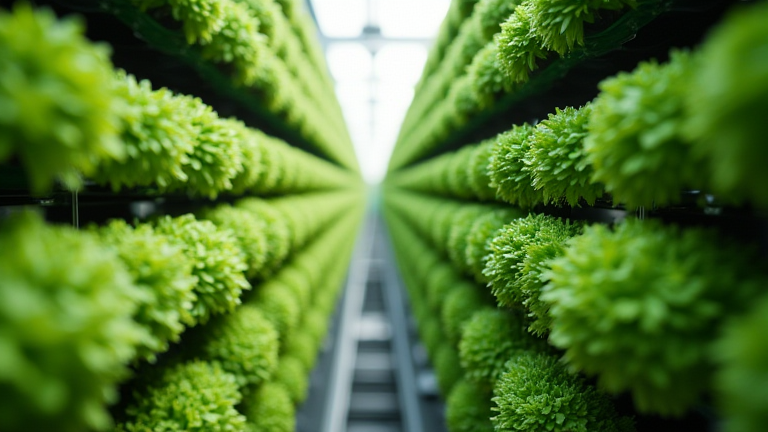
TL;DR: Vertical farming has finally reached cost parity with traditional field agriculture for select high-value leafy greens and herbs, driven by LED efficiency gains and automated harvesting. This economic inflection point means indoor farming is no longer a niche experiment but a scalable, competitive alternative for regional food supply chains.
The Market Shift: From Premium to Parity
For a decade, vertical farms struggled with energy costs exceeding $6 per square foot annually, making a head of lettuce cost $3.50 versus $1.20 in the field. That gap has collapsed. According to 2025 industry data, average production costs for indoor leafy greens now hover at $1.40–$1.60 per pound, within 10–15% of conventional California growers when factoring in transport, spoilage, and water subsidies. The tipping point came from three converging forces: LED efficacy jumped from 2.1 to 3.8 µmol/J, automation reduced labor to 8% of operating costs (down from 25%), and renewable energy contracts in regions like Texas and the Netherlands cut electricity prices by 40%.
If you want to dig deeper, check out our guide on Brain-Computer Interfaces: Direct Neural Control.
Strategic Implications for Growers and Retailers
Cost parity unlocks two strategic plays. First, regional hubs: a vertical farm serving a 200-mile radius eliminates 1,500-mile trucking emissions and 12–15% post-harvest loss. Retailers like Kroger and Ahold Delhaize have signed multi-year supply agreements, paying a 5–8% premium for “hyper-local” but no longer paying a 100% premium. Second, crop rotation intelligence: operators are shifting from single-crop lettuce to multi-tier systems that grow microgreens (10-day cycles) and herbs (basil, mint) at 90% margins, subsidizing slower-growing staples. The key strategy is “parity plus service”—offering guaranteed year-round supply and pesticide-free certification, which field farms cannot match during weather extremes.
Case Studies: Proof of Concept
Case 1: Bowery Farming (New Jersey, USA). In 2024, Bowery reported its third consecutive quarter of positive EBITDA, citing a 22% year-over-year cost reduction. Their 150,000 sq ft facility now produces 700 tons of greens annually, with a break-even price of $2.10 per unit—below the $2.30 retail price of organic field lettuce in the Northeast. The win came from AI-driven climate control that slashed water use by 95% and energy per crop cycle by 30%.
Case 2: 80 Acres Farms (Ohio, USA). This company achieved parity by partnering with a local utility to use curtailed wind power at $0.03/kWh during off-peak hours. Their 2025 pilot cut energy costs to $0.18 per head of lettuce, versus $0.22 for field-grown plus cold chain. They now supply 40 Walmart stores at the same shelf price as conventional greens, while capturing a 15% margin.
Strategic Risks and the Road Ahead
Parity is not universal. Root vegetables (potatoes, carrots) and grains remain 3–5x cheaper in open fields due to scale. The winning strategy is to pick crops with high per-pound value, rapid growth, and low caloric density—where logistics and waste dominate cost. Additionally, capital expenditure remains high ($500–$800 per sq ft), so operators must focus on capital-light models: leasing facilities, using modular container farms, and securing long-term energy contracts. The next frontier is protein (insects, microalgae) and pharmaceutical crops, where parity is projected by 2028.
FAQ
Q: Is vertical farming now cheaper than traditional farming for all crops?
A: No. Parity is only achieved for leafy greens, herbs, and microgreens. Staple crops like wheat, corn, and potatoes still cost 3–5x less in open fields due to economies of scale and free sunlight.
Q: What is the single biggest factor that drove cost parity?
A
Leave a Reply