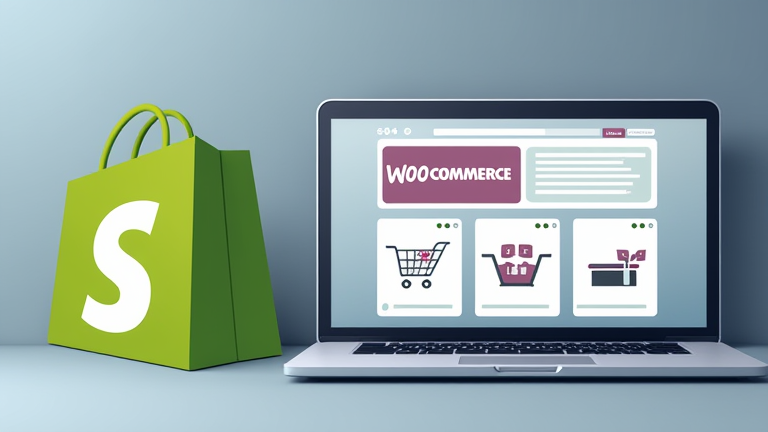
TL;DR: Shopify is the best choice for small businesses seeking a quick, hassle-free launch with minimal technical requirements, while WooCommerce is superior for those who need full control over their site’s functionality and design. Your decision ultimately hinges on whether you prioritize ease of use and speed or flexibility and long-term customization potential.
Market Analysis and Strategic Insights
The global ecommerce landscape is fiercely competitive, with Shopify and WooCommerce dominating the small business sector. According to recent market analysis, Shopify holds a significant share of the hosted platform market, appealing to entrepreneurs who lack technical expertise. Its all-in-one solution includes hosting, security, and payment processing, reducing the operational burden on small teams. Conversely, WooCommerce powers a vast majority of all online stores because it is built on WordPress, offering unparalleled flexibility. This open-source nature allows businesses to modify every aspect of their store, though it requires more technical oversight or developer support.
If you want to dig deeper, check out our guide on Top 5 Sustainable Sneaker Trends Defining Modern Streetwear.
Strategically, the choice between these two platforms affects your long-term scalability and customer acquisition costs. Shopify’s subscription model provides predictable monthly expenses, which aids in financial planning for startups. However, transaction fees and app costs can accumulate rapidly as you scale. WooCommerce, while free to install, incurs hidden costs for hosting, security certificates, and premium extensions. For businesses with unique branding needs or complex product variations, WooCommerce’s customization capabilities provide a strategic advantage that can enhance user experience and conversion rates. Small businesses must weigh the initial time investment required for WooCommerce against Shopify’s immediate usability to determine the best fit for their specific operational capacity.
Case Studies
Consider the case of a boutique clothing retailer that chose Shopify. By leveraging Shopify’s robust theme library and integrated marketing tools, they launched their store in under a week. This speed allowed them to capitalize on a seasonal trend, resulting in a forty percent increase in sales during the first month. Their focus remained on marketing rather than technical maintenance, demonstrating Shopify’s efficiency for time-sensitive ventures. In contrast, a specialized electronics supplier opted for WooCommerce. They needed to integrate with a custom inventory management system and offer complex configuration options for hardware products. By building a custom WooCommerce solution, they streamlined their supply chain and reduced operational errors by twenty-five percent. This case highlights how WooCommerce’s flexibility supports complex business logic that off-the-shelf solutions cannot easily accommodate.
FAQ
Q: Which platform is better for beginners?
A: Shopify is generally better for beginners because it is a hosted solution that requires no technical knowledge to set up and manage.
Q: Can I migrate from Shopify to WooCommerce later?
A: Yes, you can migrate data from Shopify to WooCommerce, but it requires technical expertise or hiring a developer to ensure data integrity.
Q: Which platform has lower monthly costs?
A: WooCommerce can be cheaper initially since the software is free, but costs add up with hosting and extensions, whereas Shopify has a fixed, predictable monthly fee.
Leave a Reply