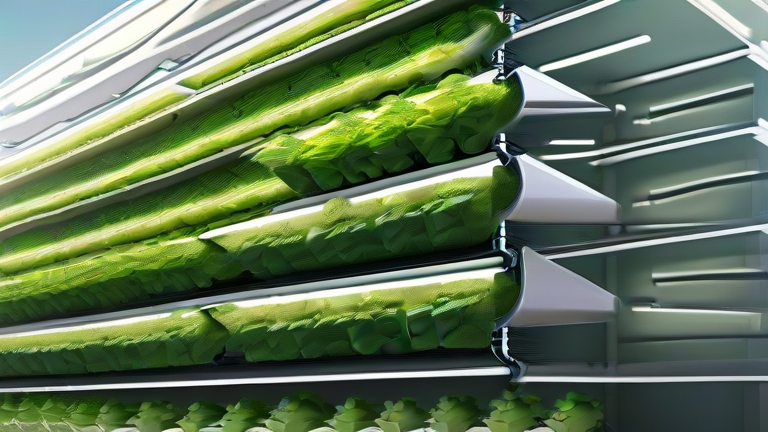
How Vertical Farming Scales to Feed Urban Populations
As the global population surges toward 10 billion by mid-century, traditional agriculture faces an existential crisis. Land scarcity, water depletion, and climate volatility threaten food security, particularly in densely populated metropolitan areas. Enter vertical farming, a revolutionary agricultural model that stacks crops in controlled indoor environments. This technology is not merely a niche curiosity but a scalable solution poised to redefine urban food systems. By integrating hydroponics, aeroponics, and aquaponics with advanced LED lighting and AI-driven climate control, vertical farms achieve yields up to 350 times greater per square foot than conventional soil-based farming.
Technological Specifications and Efficiency
The core of vertical farming lies in its precision. Modern facilities utilize fully automated systems that monitor nutrient levels, humidity, and carbon dioxide concentrations in real-time. Spec-wise, contemporary vertical farms operate with 95% less water than traditional agriculture, recycling nutrient solutions in closed-loop systems. The lighting spectrum is tuned specifically for photosynthesis, often using red and blue LEDs that consume significantly less energy than sunlight while maximizing growth rates. Furthermore, the use of aeroponic misting techniques allows roots to absorb nutrients directly, reducing water usage even further compared to hydroponic submersion methods.
If you want to dig deeper, check out our guide on EU AI Act Enforcement: Global Compliance Shifts & What’s Nex.

Recent developments have seen the integration of machine learning algorithms that predict plant health and optimize harvest times. These AI systems analyze data from thousands of sensors, adjusting variables instantaneously to prevent disease and maximize yield consistency. This level of control eliminates the variability associated with weather, allowing for year-round production of leafy greens, herbs, and microgreens with unparalleled freshness and nutritional value.
Industry Impact and Economic Viability
The economic landscape of agriculture is shifting rapidly. Vertical farming reduces transportation costs by locating farms within or near urban centers, slashing the carbon footprint associated with food miles. This “farm-to-table” model ensures produce reaches consumers within hours of harvest, preserving vitamin content and flavor. Major tech giants and venture capital firms are increasingly investing in this sector, driving innovation and lowering operational costs through economies of scale.
However,
Leave a Reply