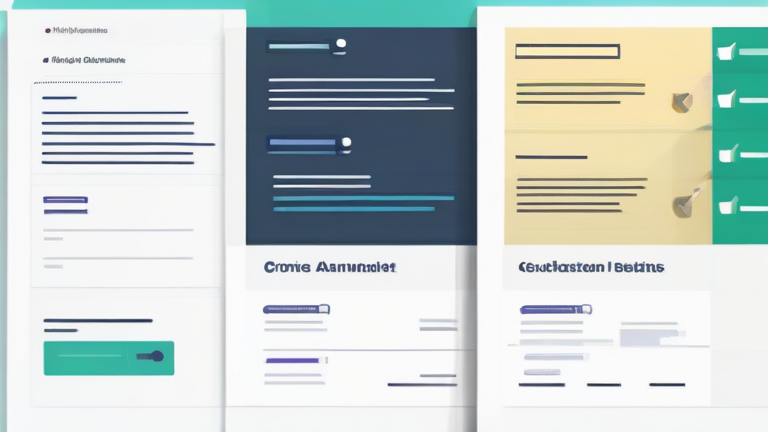
How to Cut SaaS Churn with a Custom Onboarding Checklist
TL;DR: Implementing a personalized onboarding checklist that guides users to their “aha” moment significantly reduces early-stage churn by clarifying value proposition and required actions. This strategy transforms passive sign-ups into active, retained customers by structuring the initial user experience around specific, measurable success criteria.
The High Cost of Early Churn
The SaaS market is experiencing a paradox of abundance and attrition. While customer acquisition costs (CAC) continue to climb, many companies struggle to retain users beyond the first thirty days. Market analysis indicates that a significant portion of annual churn occurs within the first two weeks of subscription. This early dropout is rarely due to product failure but rather a failure of orientation. Users often do not know how to derive value from complex interfaces, leading to frustration and immediate cancellation. Consequently, the onboarding phase is no longer a welcome email but a critical revenue retention tool.
Strategic Insights: The Power of Customization
Generic onboarding flows treat all users as identical, which is a strategic error. A custom onboarding checklist leverages user data, such as role, industry, and stated goals, to create a tailored path to value. The core strategy involves identifying the “aha” moment—the specific action that leads to long-term retention. For a project management tool, this might be creating the first board; for an analytics platform, it could be connecting a data source. By breaking this moment down into discrete, manageable steps and presenting them as a dynamic checklist, you reduce cognitive load. This approach transforms an overwhelming platform into a guided journey. Furthermore, gamifying these steps with progress indicators creates a psychological commitment, encouraging users to complete the sequence to see tangible progress.
Case Study: B2B Analytics Platform
Consider “DataFlow,” a mid-sized B2B SaaS company providing real-time analytics. DataFlow faced a 40% churn rate within the first month. Their previous onboarding consisted of a single help center link. They implemented a custom checklist triggered by user role. For marketers, the checklist focused on setting up custom dashboards; for engineers, it emphasized API integration. The checklist included only three high-impact tasks. Within six months, DataFlow saw a 22% reduction in early churn and a 15% increase in feature adoption. The key success factor was the checklist’s ability to hide irrelevant features, focusing the user’s attention solely on the actions that delivered immediate value. This targeted approach proved more effective than comprehensive training modules, which users often abandoned.
Implementation Steps
To replicate this success, start by analyzing your product analytics to identify the strongest correlation between specific user actions and retention. Once identified, map out the prerequisite steps required to reach that action. Build these steps into a visible, interactive checklist within your application interface. Ensure the checklist is dynamic, hiding completed steps and revealing new ones only as progress is made. Finally, monitor completion rates and adjust the checklist based on user feedback and drop-off points. Continuous iteration is essential to keep the onboarding experience relevant as your product evolves.
FAQ
Q: How long should the onboarding checklist be?
A: Keep it short, ideally between three and five steps, to ensure high completion rates and quick time-to-value.
If you want to dig deeper, check out our guide on Why Small Businesses Switch to QuickBooks.
Q: Should the checklist be visible to all users?
A: No, it should be customized based on user segments, roles, or goals to ensure relevance and reduce cognitive overload.
Q: What metrics should I track to measure onboarding success?
A: Track checklist completion rates, time-to-first-value, and the correlation between checklist completion and long-term retention.
Leave a Reply