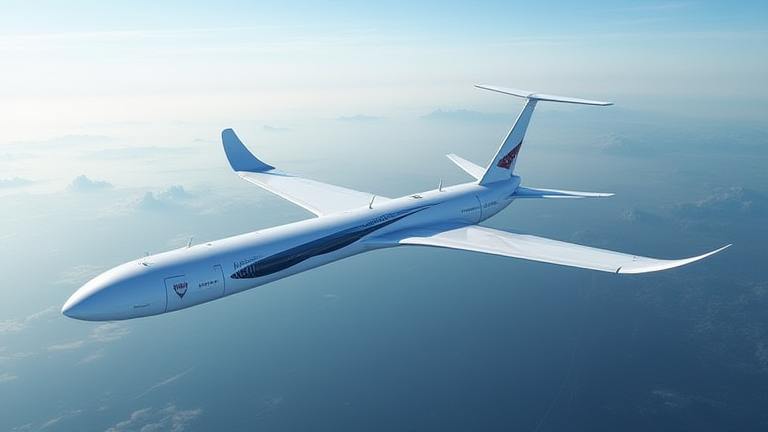
TL;DR: China’s development of a new 800-passenger flying wing jet significantly accelerates its ambition to dominate the global large-aircraft market by challenging Airbus and Boeing’s duopoly. This strategic move aims to reduce reliance on foreign technology while capturing emerging market share through innovative aerodynamic efficiency and domestic supply chain integration.
Market Analysis
The global commercial aviation market is currently defined by a stable but stagnant duopoly held by Airbus and Boeing. However, rising fuel costs and environmental regulations are forcing airlines to seek more efficient solutions. The traditional tube-and-wing design has reached its aerodynamic limits, creating a window of opportunity for radical new configurations. A flying wing design, which eliminates the fuselage and tail, offers superior lift-to-drag ratios, potentially reducing fuel consumption by up to twenty percent compared to current wide-body jets. This efficiency is crucial for carriers operating in high-cost environments. Furthermore, the Asia-Pacific region is experiencing rapid growth in air travel demand, driven by increasing middle-class populations in China, India, and Southeast Asia. Traditional manufacturers have struggled to keep pace with this surge, leading to long delivery slots that frustrate airlines. By entering the large-aircraft segment with a next-generation platform, China positions itself to capture this pent-up demand. The market is not just about volume; it is about technological leadership. Airlines are increasingly prioritizing sustainability goals, making a fuel-efficient flying wing an attractive proposition. This shift could disrupt the current order book dynamics, forcing legacy manufacturers to accelerate their own next-gen programs or risk losing market share to a more agile competitor.
If you want to dig deeper, check out our guide on Surviving on Daory: How Long Could You Last?.
Strategy Insights
Comac’s strategy extends beyond mere production; it focuses on ecosystem integration. By leveraging domestic supply chains, the company mitigates geopolitical risks associated with component imports. This approach ensures greater control over production timelines and cost structures. The flying wing project serves as a technological demonstrator, allowing engineers to refine materials and manufacturing processes that will benefit future commercial models. This holistic approach strengthens the entire aerospace industry within China, creating jobs and fostering innovation. It also signals to international partners that China is ready to compete on equal footing, potentially opening doors for joint ventures in other sectors.
Case Studies
Historical precedents show that entering the large-aircraft market is perilous. The Airbus A380, while technically impressive, failed to achieve commercial success due to high operating costs and shifting airline preferences toward smaller, more flexible twin-engine jets. Conversely, the Boeing 787 Dreamliner succeeded by focusing on fuel efficiency and passenger comfort. China’s new project must learn from these examples. It needs to ensure that the flying wing’s novel design translates into tangible operational savings for airlines, not just theoretical improvements. The key is balancing innovation with reliability. If the new jet can prove its durability and safety standards match those of established rivals, it could quickly gain traction in emerging markets where cost sensitivity is highest. This balanced approach is vital for long-term viability.
FAQ
Q: What is the primary advantage of the flying wing design?
A: It offers superior aerodynamic efficiency, potentially reducing fuel consumption by twenty percent compared to traditional tube-and-wing aircraft.
Q: Which companies currently dominate the large-aircraft market?
A: Airbus and Boeing currently maintain a duopoly in the global commercial aviation sector.
Q: Why is China developing its own large-aircraft program?
A: To reduce reliance on foreign technology, capture growing Asian market demand, and challenge the existing global aviation duopoly.
Leave a Reply