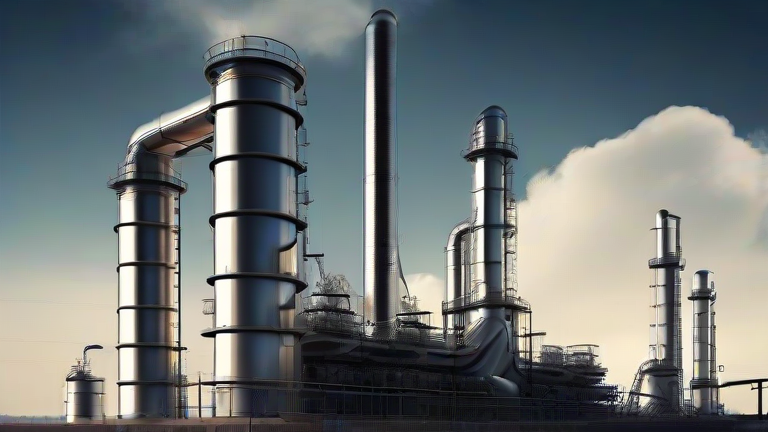
Carbon Capture Scaling for Industrial Use: Key Benefits
As the global imperative to mitigate climate change intensifies, carbon capture, utilization, and storage (CCUS) has emerged from a niche technological curiosity to a cornerstone of industrial decarbonization strategies. The transition from pilot projects to large-scale commercial deployment marks a critical inflection point for heavy industries such as cement, steel, and chemical manufacturing. These sectors, often referred to as “hard-to-abate” industries, contribute significantly to global greenhouse gas emissions and lack viable electrification alternatives for high-temperature processes. Consequently, scaling carbon capture is no longer optional but essential for maintaining operational viability while meeting stringent environmental regulations.
The market data surrounding CCUS is robust and accelerating. According to recent industry reports, the global carbon capture market is projected to grow at a compound annual growth rate (CAGR) of over 15% through 2030. This expansion is driven by substantial policy incentives, including tax credits under the Inflation Reduction Act in the United States and the European Union’s Carbon Border Adjustment Mechanism. These financial frameworks have de-risked capital expenditures for early adopters, enabling corporations to justify the high initial costs of capture infrastructure. Furthermore, the integration of captured CO2 into enhanced oil recovery (EOR) and emerging markets for synthetic fuels provides additional revenue streams, improving the economic feasibility of these projects.
If you want to dig deeper, check out our guide on 10 Proven SEO Strategies to Grow Your Business in 2024.
Expert insights highlight that the primary benefit of scaling carbon capture lies in its ability to bridge the gap between current fossil fuel dependency and a net-zero future. Dr. Elena Rossi, a senior energy analyst at Global Climate Solutions, notes, “Carbon capture is not just about reducing emissions; it is about preserving industrial competitiveness. By capturing emissions at the source, industries can continue to produce essential materials while transitioning their energy mix to renewable sources over time.” This perspective underscores the strategic value of CCUS as a transitional technology that prevents stranded assets and ensures a just transition for workforce-dependent communities.
Looking ahead, future predictions suggest a shift towards modular and scalable capture technologies. Innovations in direct air capture (DAC) and hybrid systems are expected to lower energy penalties, making capture more efficient
Leave a Reply