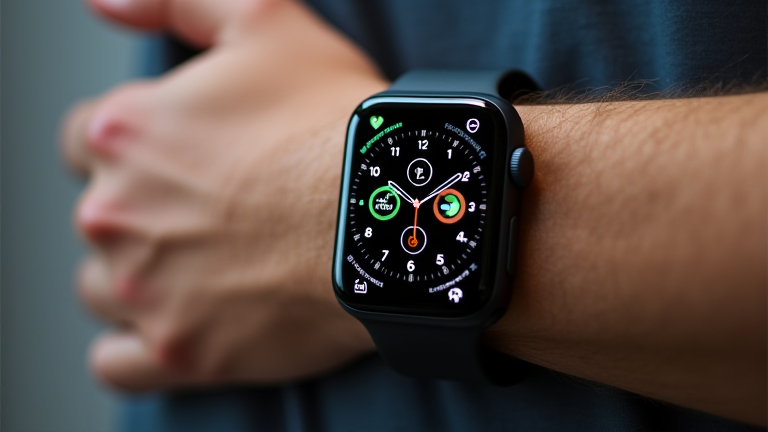
TL;DR: Switching to the Apple Watch Series 9 streamlined my morning routine by eliminating fumbling for keys and automating health checks. Its faster processor and brighter display made daily interactions seamless, reducing my reliance on my iPhone for quick tasks.
The Silent Revolution in Wearables
For years, I treated my smartwatch as a redundant accessory, a gadget that mostly drained my battery and cluttered my wrist. However, the recent shift to the Apple Watch Series 9 marked a turning point. It is no longer just a notification hub; it has become an integral part of my digital ecosystem, fundamentally altering how I interact with technology throughout the day. The latest developments in Apple’s wearable lineup are not merely incremental; they represent a significant leap in usability and efficiency that has quietly reshaped my daily habits.
If you want to dig deeper, check out our guide on Carbon Capture Now Cost-Effective: 5 Ways It Pays Off.
Specs That Matter: Speed and Light
The heart of this transformation is the S9 SiP (System in Package) chip. While previous generations were capable, the S9 introduces a faster GPU and an improved Neural Engine, which processes on-device machine learning tasks up to 1.7 times faster. In practical terms, this means features like wrist detection and sleep tracking happen in the background without lagging the user interface. Additionally, the new Retina display offers a peak brightness of 2000 nits. This is not just a spec sheet number; it is the difference between being able to read a notification on a sunny afternoon or squinting in frustration. The industry impact here is substantial. Competitors are now forced to match these brightness levels and processing speeds, pushing the entire smartwatch market toward higher performance standards. The inclusion of the double-tap gesture, powered by the new accelerometer and gyroscope, further demonstrates how hardware innovations can solve real-world problems, such as answering calls while cooking or driving.
Redefining Daily Interactions
The most immediate change in my routine was the reduction of phone dependency. Previously, I would constantly check my phone for messages, maps, or music controls. Now, the Apple Watch Series 9 handles these tasks with such fluidity that I rarely reach for my phone during brief interactions. The always-on display, combined with the improved brightness, allows me to glance at the time or heart rate without waking the device, conserving battery life while maintaining awareness. This subtle shift has reduced my screen time and increased my focus. Furthermore, the enhanced health metrics have made me more proactive about my well-being. The accurate blood oxygen and ECG readings are not just data points; they are actionable insights that prompt immediate lifestyle adjustments. The industry is taking notice, as consumers are increasingly demanding wearables that offer genuine utility rather than just novelty. Apple’s decision to prioritize user experience over raw feature bloat has set a new benchmark, compelling other manufacturers to rethink their approach to wearable design.
Industry Impact and Future Trajectory
The success of the Series 9 signals a broader trend in the tech industry: the convergence of health, productivity, and connectivity into a single, cohesive wearable experience. As artificial intelligence continues to advance, we can expect future models to offer even more personalized insights, further blurring the line between a smartwatch and a personal assistant. For now, the Series 9 stands as a testament to how refined hardware and intuitive software can transform a simple tool into an indispensable part of daily life. It has not just changed my routine; it has elevated the standard for what we expect from wearable technology.
FAQ
Q: Is the Apple Watch Series 9 significantly faster than the Series 8?
A: Yes, the S9 chip is up to 1.7 times faster in processing tasks, resulting in smoother animations and quicker app launches.
Q: Does the new display affect battery life?
A: Despite the higher peak brightness, the improved OLED technology and efficient S9 chip help maintain similar or slightly better battery performance.
Q: Who benefits most from the double-tap feature?
A: Individuals with limited hand mobility or those in situations where using one hand is difficult, such as drivers or
Leave a Reply