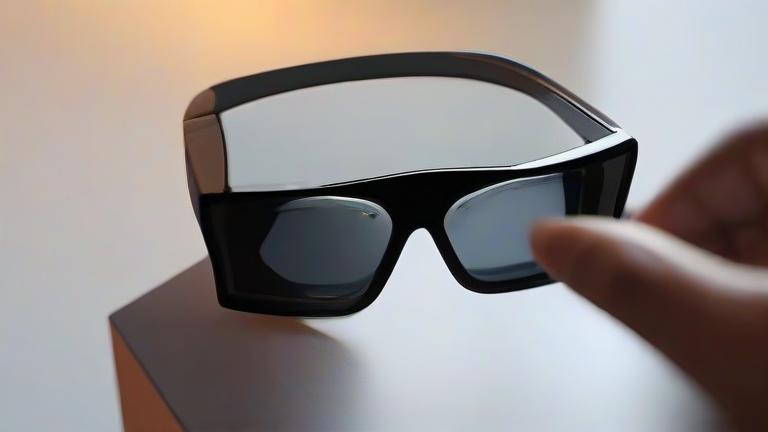
TL;DR: Apple Vision Pro is transforming enterprise augmented reality by merging high-fidelity spatial computing with seamless iOS ecosystem integration, offering unprecedented clarity for complex collaborative tasks. This shift enables businesses to replace traditional 2D interfaces with immersive 3D workflows, drastically improving training efficiency and remote collaboration capabilities across various industries.
The Hardware Revolution
The Apple Vision Pro represents a significant leap forward in mixed reality technology, primarily due to its groundbreaking hardware specifications. At its core, the device features dual 4K micro-OLED displays, one for each eye, delivering an image resolution equivalent to a 46-inch screen from ten feet away. This pixel density is critical for enterprise applications, where reading fine text or inspecting detailed engineering schematics requires absolute clarity without the “screen door” effect common in earlier VR headsets. Furthermore, the integration of the M2 and R1 chips ensures that sensor data is processed in less than 12 milliseconds, providing near-instantaneous responsiveness essential for real-time collaborative environments. The eye-tracking and hand-gesture controls eliminate the need for physical controllers, allowing workers to interact with virtual objects naturally, which reduces cognitive load and accelerates learning curves for new software interfaces.
Industry Impact and Applications
In the enterprise sector, the impact of this technology is being felt across healthcare, manufacturing, and remote technical support. Medical professionals are utilizing the device for immersive anatomy reviews and surgical planning, allowing teams to manipulate 3D models of patient data in shared virtual spaces. This capability enhances understanding of complex procedures and improves communication between specialists located in different geographic regions. In manufacturing, technicians can overlay step-by-step repair instructions directly onto machinery, reducing error rates and maintenance times. The ability to visualize data in three-dimensional space allows engineers to identify potential issues before they manifest in the physical world, saving millions in potential downtime and repair costs. Additionally, the Vision Pro’s passthrough technology enables users to remain aware of their physical surroundings while accessing digital overlays, a safety requirement in many industrial settings.
Software Ecosystem and Future Outlook
Apple’s decision to bring iPad and iPhone apps into the Vision Pro space has lowered the barrier to entry for developers. Companies do not need to build entirely new applications from scratch; instead, they can adapt existing tools to leverage spatial computing features. This interoperability means that enterprise adoption is faster and less disruptive. As more industries recognize the value of spatial computing, we can expect a surge in specialized enterprise applications designed specifically for the Vision Pro’s unique capabilities. The device’s ability to create shared virtual workspaces where remote participants appear as life-sized avatars fosters a sense of presence that video calls cannot match. This evolution in communication tools is likely to redefine how distributed teams collaborate, making geography less of a constraint for global enterprises. The combination of powerful hardware, a mature software ecosystem, and tangible productivity gains positions the Apple Vision Pro not just as a consumer gadget, but as a pivotal tool in the modern enterprise toolkit.
FAQ
Q: What is the primary advantage of Apple Vision Pro for enterprise users?
A: The primary advantage is its high-fidelity spatial computing capabilities, which allow for immersive 3D collaboration and detailed data visualization that enhances training and remote work efficiency.
If you want to dig deeper, check out our guide on Reviving My Grandparents’ Vintage GE Waffle Baker After 15 Y.
Q: Does the device support existing iPad and iPhone applications?
A: Yes, the Vision Pro is compatible with millions of iPad and iPhone apps, allowing businesses to easily adapt their current software solutions for spatial computing environments.
Q: How does the eye-tracking technology benefit workplace safety?
A: Eye-tracking and hand-gesture controls enable natural interaction without physical controllers, while passthrough technology keeps users aware of their physical surroundings, ensuring safety in industrial settings.
Leave a Reply