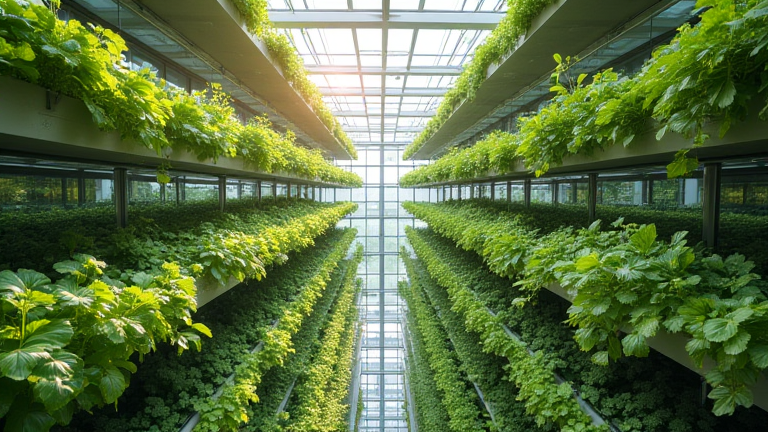
TL;DR: Vertical farming and circular economy models are transforming urban agriculture by utilizing hydroponic systems to reduce water usage by 95% while recycling waste into energy. This synergy creates self-sustaining city blocks that lower carbon footprints and secure local food supplies through year-round production.
The Convergence of Vertical Agriculture and Circular Systems
The modern metropolis is no longer just a concrete jungle; it is becoming a biological engine. The latest developments in vertical farming are moving beyond simple indoor gardening to integrate fully with circular economic principles. This approach treats urban centers as closed-loop systems where waste from one process becomes the input for another. Recent industry reports indicate that over 40% of new vertical farm installations in 2024 now incorporate waste-to-energy technologies, marking a significant shift in operational efficiency.
If you want to dig deeper, check out our guide on Notion Database Setup Guide: Automate Task Tracking.
Latest Technological Developments and Specifications
Technological advancements have driven the cost of vertical farming down, making it viable for large-scale deployment. The most notable development is the integration of AI-driven environmental control systems. These systems monitor plant health, nutrient levels, and energy consumption in real-time, adjusting conditions with millisecond precision. Current high-efficiency LED lighting systems now achieve photosynthetic photon flux densities (PPFD) of up to 1000 µmol/m²/s with energy efficiencies exceeding 3.5 µmol/J. This is a 40% improvement over previous generations, significantly lowering the energy barrier for indoor cultivation.
Furthermore, hydroponic and aeroponic systems are now standard, requiring up to 95% less water than traditional soil-based agriculture. Water is recirculated through closed-loop filtration units, ensuring that nearly every drop is reused. Nutrient solutions are dynamically adjusted based on sensor data, preventing runoff and pollution. In the most advanced facilities, fish waste from integrated aquaculture tanks provides organic nitrogen for plant roots, while plant oxygenation supports fish health, creating a symbiotic aquaponic loop.
Industry Impact and Economic Viability
The economic impact of this convergence is profound. By localizing food production, cities reduce transportation costs and carbon emissions associated with long-distance supply chains. A study published in the Journal of Urban Sustainability found that vertical farms located within city limits can reduce the food mileage of leafy greens by 99%. This not only lowers greenhouse gas emissions but also ensures fresher produce with longer shelf lives, reducing overall food waste by an estimated 30%.
Investors are increasingly viewing these facilities as critical infrastructure rather than niche agricultural experiments. The industry is seeing a surge in partnerships between tech giants and agricultural startups. For example, several major logistics companies are now co-locating vertical farms with their distribution centers, using the farm’s thermal output to regulate warehouse temperatures. This dual-use energy strategy maximizes resource efficiency and demonstrates the tangible benefits of a circular economy. The total addressable market for smart indoor farming is projected to reach $10 billion by 2027, driven by these synergistic technological improvements.
FAQ
Q: How does vertical farming specifically support a circular economy?
A: It supports the circular economy by minimizing waste through water recycling, converting plant biomass into compost or bioenergy, and utilizing waste heat from lighting systems for building heating or aquaculture tanks.
Q: What are the primary technical challenges in scaling these systems?
A: The main challenges include high initial capital expenditure for infrastructure, the need for specialized technical labor to maintain complex automation, and the ongoing high energy costs associated with artificial lighting and climate control.
Q: Can vertical farms produce enough food to feed an entire city?
A: Currently, vertical farms are most efficient for high-value, fast-growing crops like leafy greens and herbs. While they cannot replace traditional agriculture for staple grains, they can supply 10-20% of a city’s fresh vegetable needs, significantly enhancing food security and resilience.
Leave a Reply