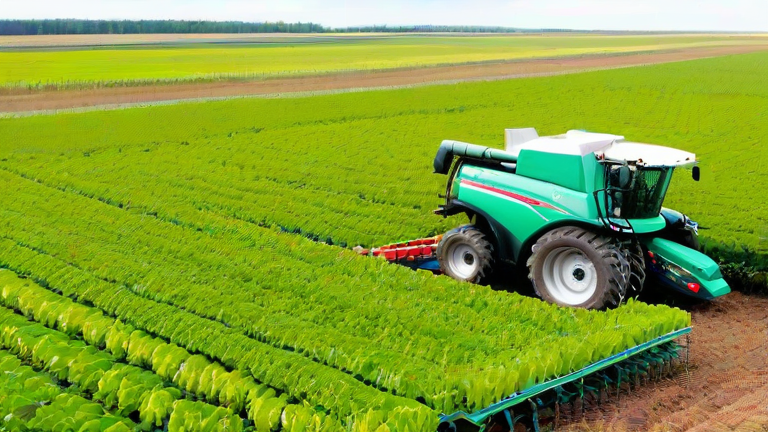
TL;DR: Synthetic food—produced via precision fermentation and cultivated-cell agriculture—has reached cost parity with conventional farmed products in several staple categories, forcing a structural rethink of traditional agriculture. Farming’s future lies not in competing on commodity volume but in premium, regenerative, and regionally differentiated production.
The economics of food production crossed a quiet threshold in the past eighteen months. Precision fermentation proteins now match conventional dairy and egg costs at commercial scale, while cultivated chicken has hit parity in select Asian and Middle Eastern markets. According to the Good Food Institute, global fermentation-enabled food investment exceeded $4.2 billion in cumulative capital, and industry analysts project cultivated-meat production costs will fall below $10 per kilogram by 2027—down from over $1,000 just five years ago.
If you want to dig deeper, check out our guide on The Rise of Hybrid Hubs: How Remote Work Is Changing.
Market Data Signals a Structural Shift
Retail data reinforces the trend. Plant-based and fermentation-derived products now account for roughly 4% of global protein sales by value, with double-digit annual growth in Europe and Asia-Pacific. Meanwhile, McKinsey estimates that alternative proteins could capture 10–15% of the global protein market by 2030—a shift worth up to $300 billion annually. Traditional dairy processors have responded by acquiring fermentation startups outright rather than competing with them.
Expert Insights: Adaptation Over Extinction
“Parity doesn’t mean farms disappear—it means the commodity era ends,” says Dr. Lena Ortiz, an agricultural economist at Wageningen University. “Producers who survive will sell traceability, soil health, animal welfare, and landscape stewardship—things a bioreactor cannot replicate.” Industry consultants echo the point: capital is rotating toward regenerative grazing, controlled-environment horticulture, and on-farm biorefineries that let farmers produce feed and fertilizer biologically.
Future Predictions
Expect three developments by 2030: hybrid supply chains where conventional and synthetic inputs blend in processed foods; consolidation of mid-sized commodity farms as margins compress; and a premium boom for certified regenerative and heritage products. Policy will follow—likely with labeling standards and transition subsidies for affected regions. The farmer of the future is less a volume producer and more a land-and-biology manager.
FAQ
Q: Does synthetic food parity mean traditional farming is obsolete?
A: No. Parity applies mainly to commodity proteins; fresh produce, specialty crops, and premium animal products retain strong farm-based advantages, and diversified farms are adapting rather than disappearing.
Q: Which technologies are driving cost parity?
A: Precision fermentation—engineering microbes to produce proteins—and cultivated-cell agriculture, supported by falling bioreactor costs, improved growth media, and large-scale manufacturing partnerships.
Q: How should farmers respond to this trend?
A: By shifting toward differentiated value: regenerative certification, direct-to-consumer sales, agritourism, and adopting biological inputs and on-farm fermentation to cut costs.
Leave a Reply