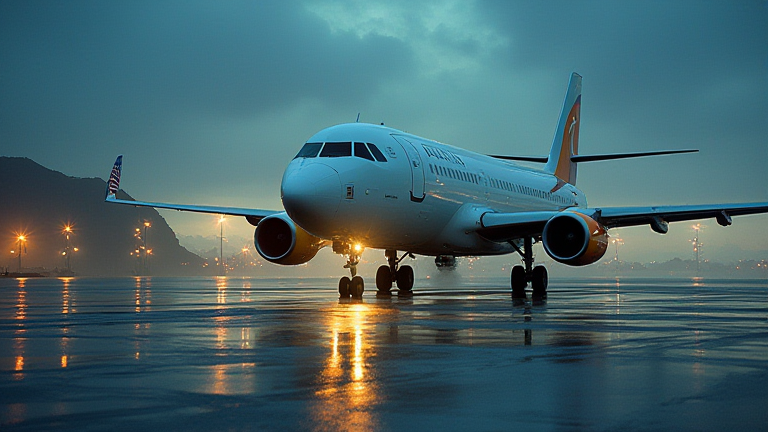
Sustainable Aviation Fuels: Replacing Jet Fuel in Commercial Flights
The aviation industry stands at a critical juncture. As global travel rebounds post-pandemic, carbon emissions are rising again, prompting airlines and manufacturers to accelerate the adoption of Sustainable Aviation Fuels (SAF). Often hailed as the most viable solution for decarbonizing short- and medium-haul flights, SAF represents a paradigm shift in how we power the skies. Unlike electric or hydrogen propulsion, which still face significant infrastructure and energy density challenges, SAF can be dropped into existing engines with minimal modification, offering an immediate pathway to reduced lifecycle emissions.

Recent developments in feedstock technology have been nothing short of transformative. Historically limited by the availability of used cooking oil and animal fats, the industry is now pivoting toward advanced feedstocks. Cellulosic ethanol, derived from agricultural residues, and synthetic fuels produced via power-to-liquid processes using captured carbon and green hydrogen are gaining traction. The European Union’s ReFuelEU Aviation mandate, which mandates a gradual increase in SAF blending percentages, is driving massive investment in these next-generation production facilities. Companies like LanzaJet and Neste are scaling up operations to meet the surging demand, signaling a robust market expansion.
If you want to dig deeper, check out our guide on Hybrid Flexibility: How Remote Work Policies Are Shifting.
Technically, modern SAF blends can reduce lifecycle carbon emissions by up to 80% compared to conventional jet fuel. Currently, the International Air Transport Association (IATA) approves blends of up to 50% SAF, down from the previous 50% limit for certain types. This certification allows airlines to begin large-scale integration without compromising safety or engine performance. However, the specs remain strict; fuels must meet ASTM D7566 standards to ensure consistency in energy density and cold-flow properties, ensuring that a flight from New York to London performs identically whether fueled by crude or compost.
The industry impact is profound. Major carriers such as Delta, United, and Lufthansa have pledged to achieve net-zero emissions by 2050, with SAF serving as the cornerstone of their strategies. While critics argue that SAF remains significantly more expensive than fossil-based kerosene—often costing two to three times more—economies
Leave a Reply