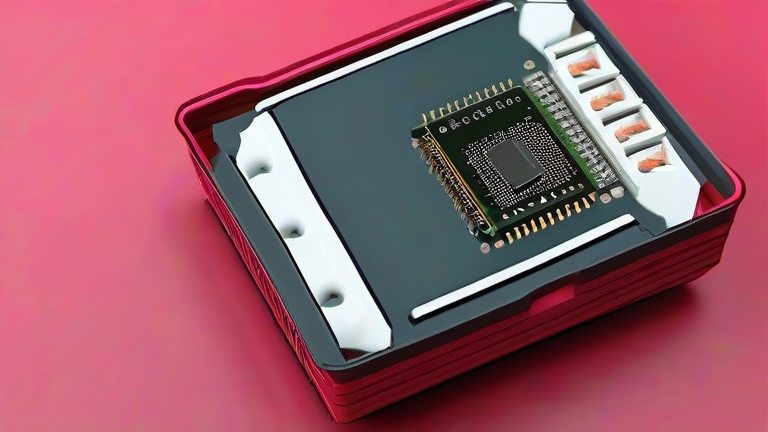
TL;DR: For pure home automation, the Raspberry Pi 5 wins on price, software maturity, and GPIO compatibility, while the Jetson Orin Nano is overkill unless you need local AI vision (object detection, facial recognition) at the edge. Choose the Pi 5 for sensors and relays; choose the Orin Nano only if your automation pipeline demands heavy neural network inference.
Raspberry Pi 5: The Pragmatic Workhorse
The Raspberry Pi 5, released in late 2023, has matured with a revised Broadcom BCM2712 quad-core Arm Cortex-A76 processor running at 2.4GHz. Its most significant upgrade for home automation is the PCIe 2.0 interface, which now allows NVMe SSD boot without USB bottlenecks—cutting storage latency by over 10x compared to SD cards. This matters for Home Assistant or Node-RED databases that constantly write state logs. The Pi 5 also introduced a dedicated RP1 I/O controller, providing faster GPIO, two 4K HDMI outputs, and dual 4-lane MIPI camera connectors. For smart home hubs, the 8GB variant (now $80) handles dozens of Zigbee/ZWave devices via USB dongles while running MQTT brokers, Frigate (with a USB Coral TPU), and a local voice assistant simultaneously. The software ecosystem is unmatched: Debian-based Raspberry Pi OS, Docker, and official Home Assistant images are battle-tested. Latest community developments include stable PCIe Gen 3 support via a firmware update, enabling 1GB/s SSD transfers—critical for video surveillance storage.
If you want to dig deeper, check out our guide on SEO Tutorial: Step-by-Step Guide to Boost Your Rankings.
Jetson Orin Nano: AI-First Automation
NVIDIA’s Jetson Orin Nano (Super variant, released late 2024) packs a 1024-core Ampere GPU, 6-core Arm Cortex-A78AE CPU, and 8GB LPDDR5, delivering up to 67 TOPS of INT8 AI performance. For home automation, this shifts the paradigm from “sensor-triggered” to “context-aware.” Latest developments include JetPack 6.0 with YOLOv11 and NanoLLM support, enabling real-time person/animal/package detection at 30fps on a 5W power budget. The Orin Nano can run multiple AI models simultaneously—e.g., a custom gesture detector for lights, a sound classifier for glass breaking, and a privacy-preserving on-device face recognition for door locks. Its 128GB/s memory bandwidth lets it process 4K video feeds from 3-4 cameras without dropping frames. However, the catch is software complexity: you’ll need CUDA, TensorRT, and custom Python pipelines. Home automation integrations exist (e.g., via ROS2 or MQTT bridges), but they require deep Linux and AI expertise. The Super variant costs $249 (previously $499), making it a value play only if AI inference is your core requirement.
Industry Impact & Verdict
The industry is splitting into two camps: hobbyist-grade automation (Pi 5) and AI-edge appliances (Orin Nano). Raspberry Pi’s dominance in smart home hubs is strengthened by the new Raspberry Pi Connect remote access service and the upcoming Pico 2 W for sensor nodes. Meanwhile, NVIDIA’s push into home robotics (e.g., with Isaac ROS) is making Orin Nano the de facto brain for autonomous vacuums and security drones. For most users, the Pi 5 is the correct choice because home automation latency (<50ms) rarely demands GPU inference. But if you’re building a “smart” system that recognizes family members, tracks pets, or reads energy meters from camera images, the Orin Nano’s TOPS are transformative—just budget 3x more time for tuning. Power consumption: Pi 5 idles at 3W, Orin at 5W (but spikes to 15W under load). Cooling: Pi 5 needs a small heatsink; Orin requires an active fan.
FAQ
Q: Can the Raspberry Pi 5 perform AI object detection for home automation
Leave a Reply