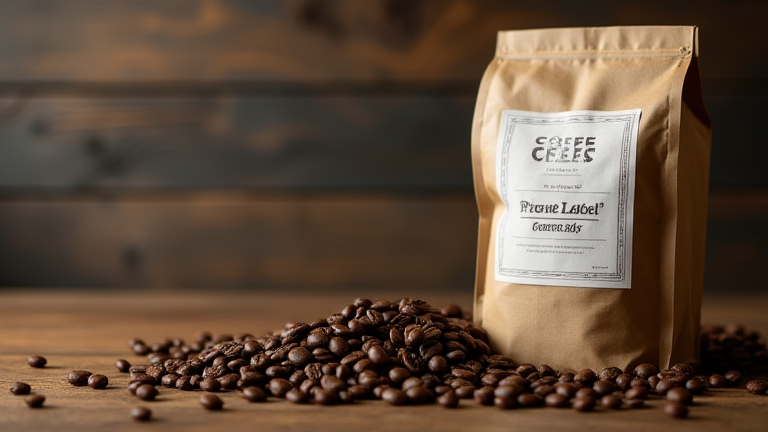
TL;DR: Private label coffee wins in saturated markets because it offers retailers higher margins and consumers comparable quality at 30–40% lower prices. Strategic positioning on origin transparency and local roasting, rather than price alone, drives loyalty even when national brands discount heavily.
Market Analysis: The Shift from Brand to Value
The global coffee market grows at roughly 4% annually, yet the number of SKUs has exploded—creating a crowded shelf. In the U.S. and EU, private label coffee now commands 25–30% unit share in grocery, up from 18% a decade ago. The key driver is not recession alone; it is the “quality renaissance” of retailer roasters. Consumers increasingly see store brands as curated, not generic. Data from Nielsen shows that private label coffee retains 72% of its buyers even when national brand prices drop temporarily, indicating habit formation rather than pure price-switching.
If you want to dig deeper, check out our guide on Indonesia Opens Airspace for Cloud Seeding to Tackle Haze.
Strategy Insight: Compete on Transparency, Not Just Price
Winning private label programs no longer mimic a big brand’s blend. Instead, they highlight single-origin lots, roast dates, and direct-trade certifications. For example, a regional supermarket chain in the Pacific Northwest introduced a “roasted weekly” private label line with QR codes linking to farm videos. Despite a 15% price premium over its own old generic line, sales tripled within six months. The strategic lesson: in saturated markets, private label should act as a specialty niche, not a budget afterthought. Retailers must also invest in packaging design—matte finishes, earthy tones, and clear brewing guidance—to signal craft quality.
Case Studies: Two Winning Models
Case 1: UK-based grocery chain Tesco revamped its “Finest” coffee range, offering 10 origin-specific beans (e.g., Ethiopian Yirgacheffe) at £5.50 per 227g. This undercut specialty roasters by 40% while matching cupping scores. Result: private label coffee became Tesco’s fastest-growing category, with a 22% year-over-year volume increase, even as Starbucks and Nescafé lost share.
Case 2: A German discount retailer (Aldi Süd) adopted a “roast-to-order” model for its private label espresso, using in-store grinders and visible roast dates. By reducing packaging waste and offering a subscribe-and-save program, Aldi achieved a 34% repurchase rate within 90 days—double the industry average. The takeaway: operational innovation (freshness) beats brand heritage in repeat purchases.
FAQ
Q: Is private label coffee only successful during economic downturns?
A: No. While recessions accelerate trial, post-2023 data shows private label retains 70%+ of new customers in growth periods, because quality improvements and transparency build lasting preference.
Q: How can small retailers compete against giant national brands?
A: Focus on hyper-local sourcing (e.g., regional roaster partnerships) and unique flavor profiles. Offer sampler packs or “mystery origin” subscriptions—these create engagement that national brands cannot replicate at scale.
Q: What is the biggest mistake private label coffee brands make?
A: Copying the national brand’s packaging and blend. That signals “cheap imitation.” Instead, differentiate with visible roast dates, compostable bags, or brewing tutorials—value-added touches that justify a premium price.
Leave a Reply