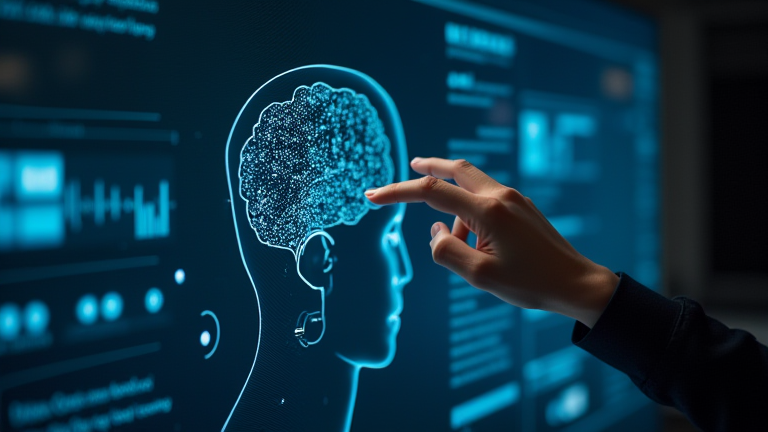
TL;DR: Neural interfaces convert electrical signals from the motor cortex into digital commands, enabling users to control devices without physical movement. This technology is rapidly evolving from clinical tools for paralysis into consumer-grade wearables that offer seamless, hands-free interaction with the digital world.
The Mechanism of Mind-Driven Control
At the core of hands-free device control lies the brain’s motor cortex, the region responsible for planning and executing voluntary muscle movements. Modern neural interfaces, primarily using electroencephalography (EEG) or implanted microelectrodes, detect the unique electrical patterns generated when a user intends to perform an action. These signals are captured, amplified, and transmitted to a decoding algorithm. Advanced machine learning models analyze these neural firings, translating specific patterns into binary code or spatial coordinates. For instance, imagining moving a right hand might trigger a specific signal frequency that the system interprets as a “click” or a “move cursor right” command. This process happens in milliseconds, creating a near-instantaneous link between thought and machine action.
If you want to dig deeper, check out our guide on Wearable Tech Predicts Health Issues Days in Advance.
Market Dynamics and Growth Trajectory
The global brain-computer interface market is experiencing exponential growth, driven by both medical necessity and consumer curiosity. Recent industry reports indicate that the market size is projected to reach approximately $4.5 billion by 2030, growing at a compound annual growth rate of over 15 percent. This surge is fueled by significant advancements in non-invasive wearable tech, which lowers the barrier to entry for non-medical users. Major tech giants and startups are investing heavily in R&D, with recent funding rounds exceeding $2 billion in the last two years alone. The demand is particularly strong in the accessibility sector, where individuals with spinal cord injuries or amyotrophic lateral sclerosis rely on these devices for communication and mobility. However, the consumer electronics sector is also seeing traction, with early adopters using neural headsets for gaming and productivity applications.
Expert Perspectives on Usability
Leading neuroscientists emphasize that the primary challenge is not signal acquisition, but signal clarity. Dr. Elena Ross, a prominent researcher in neural engineering, notes that “the brain is noisy, and extracting clean commands requires sophisticated noise-canceling algorithms.” She highlights that current systems are reaching a “sweet spot” where battery life, signal accuracy, and user comfort align. Experts also point to the ethical implications of neural data privacy. As these devices collect intimate biological data, regulatory frameworks are being developed to ensure that neural data is treated with the same sensitivity as financial or health information. Industry leaders predict that once privacy concerns are adequately addressed, consumer adoption will accelerate dramatically.
Future Predictions and Integration
Looking ahead, the next five years will likely see a convergence of neural interfaces with augmented reality (AR) and virtual reality (VR). Imagine controlling a virtual environment with a thought, or typing an email simply by thinking about the words. Predictions suggest that by 2028, we will see the first commercially viable, non-invasive neural headsets capable of high-bandwidth data transfer. These devices will not just interpret simple commands but will allow for complex, multi-dimensional interactions. Furthermore, the integration with large language models could allow for “thought-to-text” synthesis, where the system predicts the user’s intended sentence based on partial neural cues, drastically reducing the cognitive load on the user. The future of computing is moving away from keyboards and screens, heading toward a seamless, thought-driven experience that feels less like operating a machine and more like an extension of the mind itself.
FAQ
Q: Are neural interfaces safe for long-term use?
A: Non-invasive EEG-based headsets are generally considered safe for long-term use as they do not penetrate the skin or skull, though users should monitor for skin irritation from electrode contact.
Q: Do I need to undergo surgery to use a neural interface?
A: No, most current consumer and research-grade devices use non-invasive methods like EEG caps or headbands, while invasive implants are reserved for specific medical treatments under strict clinical supervision.
Q: How accurate
Leave a Reply