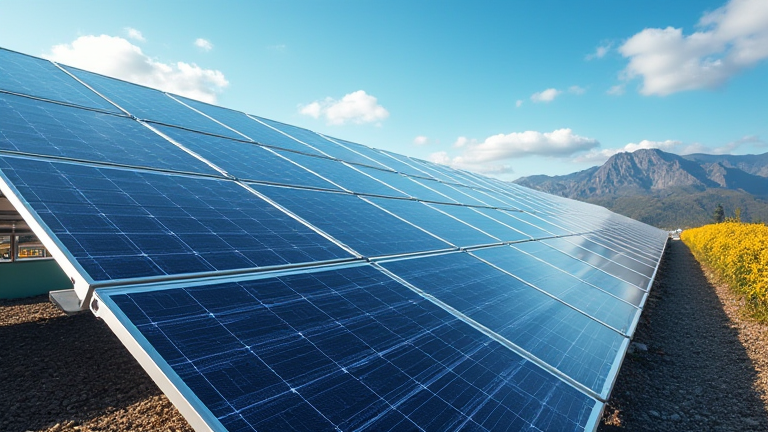
TL;DR: Decentralized solar grids combine rooftop and community-scale PV with modular battery storage to deliver reliable, resilient power without waiting for centralized utility upgrades. Recent leaps in lithium iron phosphate (LFP) chemistry, bidirectional inverters, and AI-driven energy management have pushed these systems from pilot projects to bankable infrastructure.
The Storage Breakthrough Driving the Shift
For years, decentralized solar faced a simple limitation: the sun sets. Battery costs and cycle-life constraints kept storage economically marginal. That calculus has changed. LFP battery packs now routinely exceed 6,000 charge cycles at 80% depth of discharge, with round-trip efficiencies above 95% and installed costs that have fallen roughly 80% since 2015. Modular 5–20 kWh units let a single household scale incrementally, while community microgrids stack hundreds of units behind a shared controller. Meanwhile, bidirectional inverters with grid-forming capability allow these systems to island seamlessly during outages and re-synchronize when utility power returns—no manual switching required.
If you want to dig deeper, check out our guide on Personalized mRNA Flu Vaccines: The Future of Seasonal Prote.
Specs That Matter in the Field
Modern decentralized systems are defined by a handful of performance benchmarks. Typical residential nodes pair 5–15 kW of PV with 10–30 kWh of storage, delivering 3–10 kW of continuous backup power. Commercial and community nodes scale to 100 kW–1 MW of PV with 200 kWh–2 MWh of storage. Grid-forming inverters respond to load steps in under 20 milliseconds, fast enough to keep motors and electronics running through a utility fault. AI-based energy management systems now forecast load and generation with 24-hour accuracy often exceeding 90%, arbitraging storage charge and discharge to cut bills by 20–40% in time-of-use markets.
Industry Impact
The effects are rippling across the energy sector. Utilities in Australia, California, and parts of sub-Saharan Africa are increasingly treating distributed storage as a grid asset rather than a threat, contracting aggregated home batteries for frequency response and peak shaving. Virtual power plants built from thousands of decentralized nodes now bid into wholesale markets, with some aggregations exceeding 250 MW of controllable capacity. For manufacturers, demand for hybrid inverters and modular packs has spawned a fast-growing segment that analysts expect to surpass $50 billion annually by the late 2020s. And in regions where grid extension is prohibitively expensive, decentralized solar-plus-storage is leapfrogging traditional infrastructure entirely—bringing reliable electricity to communities that never had it.
What Comes Next
Expect tighter integration between storage, EV charging, and heat pumps, plus second-life battery repurposing that further lowers costs. Standards for interoperability—so one vendor’s battery can talk to another’s inverter—remain the biggest unlock. As those mature, decentralized solar grids will move from promising alternative to default architecture.
FAQ
Q: How long do decentralized solar storage systems last?
A: Quality LFP batteries typically retain 80% capacity after 6,000+ cycles—roughly 15–20 years of daily use—while PV panels carry 25-year performance warranties.
Q: Can a decentralized grid run entirely off-grid?
A: Yes, with sufficient PV and storage sizing plus a grid-forming inverter; most hybrid designs stay grid-connected for backup and export but can island automatically during outages.
Q: Are these systems cost-effective without subsidies?
A: In high-electricity-price or time-of-use markets, payback periods of 5–8 years are now common; remote areas often see faster returns versus diesel generation.
Leave a Reply