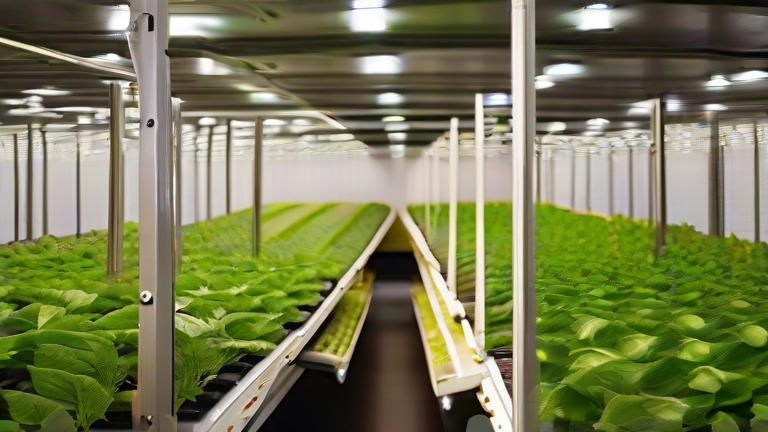
Boost Local Food: How Urban Vertical Farms Reduce Food Miles

The global food supply chain is under immense pressure. Traditional agriculture relies heavily on long-distance transportation, contributing significantly to carbon emissions and nutrient loss. Enter urban vertical farming, a revolutionary approach that brings production directly into the heart of cities. By stacking crops in controlled environments, these facilities drastically cut “food miles,” ensuring fresher produce reaches consumers faster while minimizing environmental impact.
Recent technological advancements have transformed vertical farming from a niche experiment into a scalable industrial solution. Modern facilities utilize advanced LED lighting systems that mimic natural sunlight but with precise spectral tuning. This allows for optimized photosynthesis rates, resulting in higher yields per square foot compared to traditional soil-based methods. Furthermore, automated hydroponic and aeroponic systems recycle water with up to 95% efficiency, addressing critical concerns about water scarcity in arid urban centers.
Industry leaders are now integrating artificial intelligence and machine learning to monitor plant health in real-time. Sensors detect subtle changes in humidity, temperature, and nutrient levels, adjusting conditions automatically to prevent disease and maximize growth speed. This data-driven approach reduces labor costs and ensures consistent quality, making locally grown produce economically competitive with imported goods.
The impact on the industry is profound. By reducing reliance on global supply chains, urban farms enhance food security and resilience against disruptions caused by climate change or geopolitical instability. Local communities benefit from access to nutrient-dense, pesticide-free vegetables year-round. Moreover, the reduction in transportation lowers the carbon footprint associated with food distribution, aligning with global sustainability goals.
Despite these advantages, challenges remain. High initial setup costs and energy consumption for lighting and climate control are significant barriers. However, innovations in renewable energy integration and energy-efficient LED technology are steadily lowering operational expenses. As investment continues to flow into the sector, economies of scale will further drive down costs.
Looking ahead, the convergence of vertical farming with smart city infrastructure promises a more sustainable future. Rooftop farms, converted warehouses, and even underground facilities are becoming common sights in major metropolitan areas. These innovations not only reduce food miles but also create green jobs and revitalize urban spaces.
In conclusion, urban vertical farming represents a pivotal shift in how we produce and consume food. By leveraging cutting-edge technology to localize
Leave a Reply