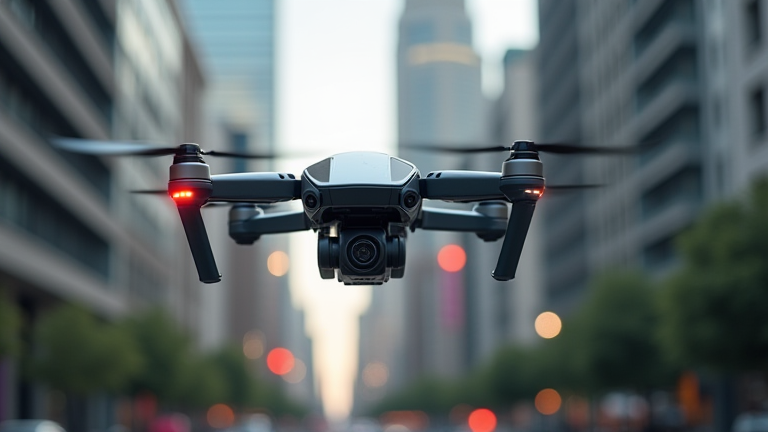
TL;DR: Autonomous drones are rapidly transforming grocery delivery in dense urban areas by bypassing traffic congestion and offering sub-thirty-minute service windows. This shift is driven by significant cost reductions in hardware and favorable regulatory changes, creating a high-growth market segment that prioritizes speed and accessibility over traditional truck logistics.
Market Analysis
The urban last-mile delivery sector faces a critical inflection point. Traditional ground-based logistics struggle with rising fuel costs, traffic bottlenecks, and labor shortages in metropolitan hubs. Drone delivery offers a compelling alternative, promising up to 50% lower operational costs per mile once scaled. Market projections indicate that the urban air mobility (UAM) sector for goods will expand exponentially, driven by the urgent need for efficient supply chain solutions in cities where vertical space is scarce. The primary barrier is no longer technology, but regulatory fragmentation and public acceptance. However, as municipalities begin to designate “no-fly” zones and establish clear airspace management protocols, the path to commercial viability becomes clearer. Investors are increasingly viewing drone logistics not as a novelty, but as essential infrastructure for modern urban resilience.
Strategy Insights
Companies entering this space must adopt a hybrid strategy that balances technological innovation with community integration. A pure drone-only model is often insufficient for heavy or bulk items; therefore, successful operators partner with traditional retailers to handle high-volume SKUs via ground transport while reserving drones for urgent, high-value, or lightweight items. Strategic partnerships with real estate developers are also crucial. By integrating drone pads into new commercial building designs, companies can secure exclusive landing rights and reduce “last-meter” delivery friction. Furthermore, data analytics play a pivotal role. Real-time traffic and weather data must be integrated into flight planning algorithms to ensure reliability. Brands that emphasize safety, noise reduction, and environmental benefits in their marketing can mitigate public resistance, turning skeptics into advocates.
Case Studies
In Singapore, the government has actively facilitated drone trials for medical supplies and groceries, demonstrating how top-down regulatory support can accelerate market entry. Similarly, in the United States, Zipline and Wing have successfully piloted grocery deliveries in suburban and semi-urban areas, proving the economic viability of autonomous air transport. These case studies highlight that success depends less on the drone itself and more on the ecosystem of support, including ground crew coordination, customer interface design, and robust safety protocols. The most effective strategies involve transparent communication with local communities, addressing concerns about privacy and safety proactively rather than reactively.
FAQ
Q: Are drone deliveries safe in crowded cities?
A: Yes, modern drones are equipped with advanced obstacle avoidance sensors and geofencing technology that prevents them from entering restricted airspace, ensuring they operate safely around pedestrians and other aircraft.
If you want to dig deeper, check out our guide on On-Device AI Agents Are Reshaping Daily Productivity Workflo.
Q: What types of groceries are best suited for drone delivery?
A: Lightweight, high-perishability items such as fresh produce, medications, and small household essentials are ideal, as they maximize the efficiency of the drone’s payload capacity and flight range.
Q: How do regulatory hurdles affect market expansion?
A: Regulatory clarity is the primary gatekeeper for growth; companies must navigate varying local laws regarding noise, privacy, and airspace usage, making multi-jurisdictional compliance strategies essential for scaling operations globally.
Leave a Reply