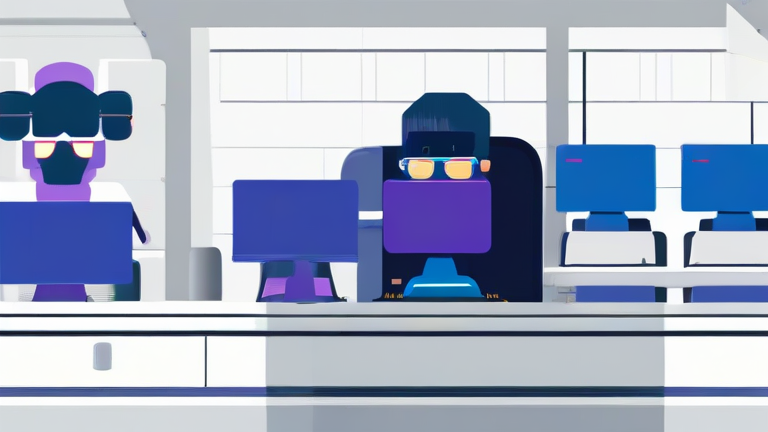
AI Agents Replace Junior Coders in Enterprise Stacks
The traditional entry-level position for software engineers is undergoing a seismic shift. For decades, junior developers served as the essential training ground for enterprise technology, handling boilerplate code, bug fixes, and basic integration tasks. Today, however, advanced AI agents are not just assisting these roles; they are actively replacing them. According to a recent report by McKinsey, generative AI could automate approximately 30% of current work hours in software development within the next five years, with junior-level tasks being the most susceptible to automation. This trend is reshaping the hiring landscape, forcing enterprises to rethink their talent acquisition strategies and technical workflows.

If you want to dig deeper, check out our guide on 10 Proven Business Growth Strategies for 2024.
Market data supports this rapid transition. GitHub’s Copilot and similar enterprise-grade AI coding assistants have seen a 40% year-over-year increase in adoption among Fortune 500 companies. These tools are no longer limited to simple autocomplete functions; they are evolving into autonomous agents capable of understanding complex project structures, writing unit tests, and deploying microservices. A survey by Gartner reveals that 60% of CIOs plan to reduce their entry-level hiring budgets by at least 15% in the coming fiscal year, citing the efficiency of AI-driven development pipelines. This shift is particularly evident in backend infrastructure and legacy system maintenance, where AI agents can parse existing codebases and refactor them with minimal human intervention.
Industry experts argue that this is not necessarily a negative development. Dr. Elena Ross, a senior technology analyst at Forrester, notes, “The role of the coder is evolving from syntax writer to system architect. AI handles the syntax, allowing humans to focus on high-level design, security, and business logic. While the barrier to entry for coding has lowered, the demand for critical thinking and architectural oversight has never been higher.” However, critics warn of a potential skills gap. If companies stop training juniors, they may face a shortage of senior engineers in the future. This “missing middle” phenomenon could stifle innovation and reduce the diversity of thought in technical teams.
Looking ahead, the industry is
Leave a Reply