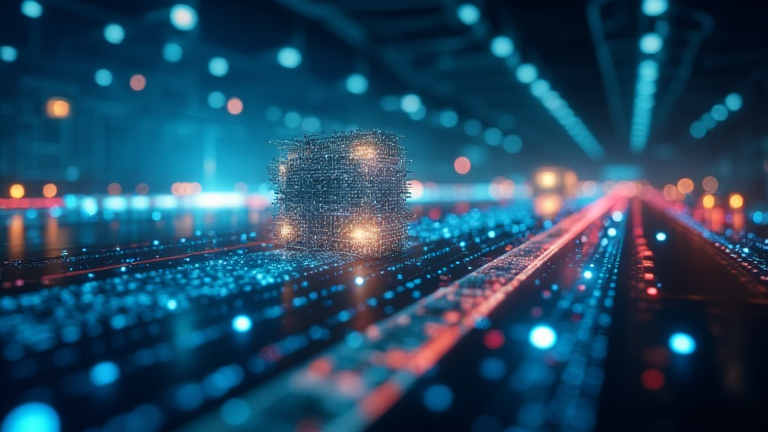
TL;DR: Digital twins—live virtual replicas of physical supply chains—are moving from pilot projects to operational backbone, cutting logistics latency by up to 30% through real-time simulation and predictive “what-if” analysis. By integrating IoT sensor streams, AI forecasting, and edge computing, these twins now optimize inventory, routing, and carbon footprint simultaneously across multi-tier networks.
The New Reality: From Static Models to Living Networks
For decades, supply chain optimization relied on historical data and static spreadsheets. That era is ending. Digital twins ingest live telemetry from warehouse sensors, GPS-tracked containers, port cranes, and even weather satellites, then mirror the physical flow in a high-fidelity virtual environment. The latest developments focus on “end-to-end twins” that span raw material extraction to last-mile delivery, rather than siloed factory-floor simulations. This shift is driven by the convergence of 5G low-latency connectivity and edge AI, which allows on-premise twin instances to update in milliseconds—critical for perishable goods or just-in-time manufacturing.
If you want to dig deeper, check out our guide on New Approach: How to Build Smarter, More Capable AI.
Technical Specs: What Powers a Modern Twin?
Current enterprise-grade twins (e.g., Siemens Xcelerator, NVIDIA Omniverse-based, or AWS Supply Chain Twin) run on hybrid cloud-edge architectures. Key specs include: ingestion of 100k+ IoT events per second per node, sub-100ms synchronization latency, and graph-based data models that map 10,000+ supplier relationships. Advanced twins now feature “digital rehearsal” – running Monte Carlo simulations of 10,000 disruption scenarios (port strikes, typhoons, tariff spikes) in under five minutes. The newest version supports “twin-to-twin” communication, where separate regional twins negotiate rerouting autonomously, without human intervention, using reinforcement learning policies trained on historical exception data.
Industry Impact: Measurable Gains and New Bottlenecks
The impact is tangible. A major automotive OEM reduced inbound logistics costs by 18% by using a twin to rebalance rail versus truck flows daily. A pharmaceutical distributor cut cold-chain spoilage by 26% after the twin predicted refrigeration failures 48 hours in advance. Ports like Rotterdam and Singapore now run “digital berth planning,” increasing container throughput by 12% without new infrastructure. However, early adopters report new bottlenecks: data governance complexity (who owns the twin’s input data?), model drift (physical assets age, but the twin may not update), and cybersecurity risk—a hijacked twin can feed false rerouting instructions to autonomous trucks. The industry is responding with standardized open APIs (e.g., Digital Twin Consortium’s Supply Chain Interop spec) and “twin provenance” blockchain logs to verify simulation integrity.
What’s Next: Autonomous Twins and Carbon-Aware Routing
The next 18 months will see twins gain “autonomous action” permissions—not just suggesting but executing reroutes, reorders, and storage reallocations within predefined risk envelopes. Also emerging: carbon-aware twins that optimize for both cost and emissions simultaneously, using live energy-grid data to select green warehouses or low-emission shipping lanes. The clear trend is that digital twins are no longer a visualization tool; they are becoming the control plane for global commerce.
FAQ
Q: How often does a digital twin update itself?
A: Modern twins update continuously, with edge nodes refreshing sensor data every 50–200 milliseconds. Full model re-synchronization (including supply chain graph changes) occurs every 5–15 minutes, while deep “what-if” simulations run on-demand or scheduled hourly.
Q: What is the minimum data infrastructure required to deploy a supply chain twin?
A: You need at least 70% of your inventory nodes and 80% of transport assets to emit IoT data (RFID, GPS, or telemetry), plus a cloud data lake and API access to ERP/WMS systems. For small operations, a lightweight twin can start with just 10 critical SKUs and two distribution centers, scaling incrementally.
Q: Can digital twins predict black swan events like a pandemic or port closure
Leave a Reply