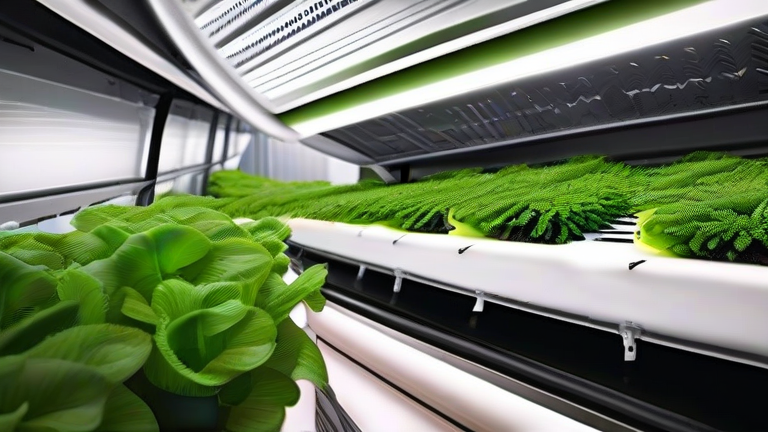
TL;DR: Vertical farming startups are increasingly relocating and designing new facilities for arid, desert regions to leverage abundant solar energy, lower land costs, and reduced water scarcity. This pivot allows year-round, high-density crop production using up to 95% less water than traditional agriculture, turning extreme climates into strategic advantages rather than obstacles.
Why Deserts? The New Logic of Controlled Environment Agriculture
For years, vertical farms clustered in urban centers like New York, Singapore, and Tokyo, chasing proximity to consumers. But the high cost of real estate and electricity—often from non-renewable grids—undermined profitability. Now, startups like RedSea Farms (Saudi Arabia) and AeroFarms’ new Abu Dhabi facility are flipping the model. Deserts offer three key advantages: uninterrupted solar irradiation (up to 2,500 kWh/m²/year), vast tracts of land priced at a fraction of urban rates, and naturally low humidity that reduces fungal pressure. By pairing solar panels with advanced HVAC and desalination systems, these farms achieve energy self-sufficiency that urban towers cannot.
If you want to dig deeper, check out our guide on 5 Easy Lifestyle Hacks to Boost Your Daily Happiness.
Technical Specs: Engineering for Extreme Heat
Modern desert vertical farms are radically different from their temperate counterparts. Thermal separation is critical: facilities use double-skinned polycarbonate panels with argon gas gaps to maintain 22°C internal temperatures when external temps hit 48°C. Evaporative cooling pads (made from cellulose) plus closed-loop misting systems cut cooling energy by 40% compared to compressor-based AC. Water is sourced from on-site solar desalination (reverse osmosis at 4 kWh/m³) or brackish aquifers, with 100% condensation recovery from the air-handling units. LED lighting is tuned to a 660nm red / 450nm blue ratio, but desert farms rely on transparent photovoltaic glass (15% efficiency) that also diffuses light for the crops below. Yield data from the Negev Desert pilot shows lettuce at 12 kg/m²/month—double the output of a Dutch greenhouse—with a water footprint of just 0.8 L per head.
Industry Impact: Reshaping Global Supply Chains
This pivot is not a niche experiment. The Global Vertical Farming Market is projected to grow from $5.6B (2024) to $20.8B by 2030, with desert installations accounting for 35% of new capacity. Gulf states are leading: the UAE aims to produce 75% of its food domestically by 2030, and Saudi Arabia’s NEOM project has committed $120M to a 65,000 m² indoor farm. The ripple effect is twofold: first, it decouples food production from arable land, making nations with zero topsoil viable breadbaskets; second, it forces traditional ag-tech suppliers to redesign equipment for sand-resistant filtration and extreme thermal cycling. Critics note high capex ($800–$1,200/m²) and logistics costs for inland deserts, but the falling price of solar storage (lithium-iron-phosphate batteries at $90/kWh) is closing that gap. Expect a wave of joint ventures between vertical farm operators and Gulf sovereign wealth funds by 2026.
FAQ
Q: Can vertical farms survive sandstorms and 50°C heat without constant breakdowns?
A: Yes, but only with sealed, positive-pressure airlocks and redundant filtration. Modern units use HEPA-14 filters with pre-cyclone separators to handle dust loads up to 5 g/m³, and all cooling compressors are liquid-cooled (not air-cooled) to avoid overheating. Fail-safe battery backup ensures climate control persists for 48 hours during grid outages.
Q: What crops make economic sense in desert vertical farms?
A: High-value, fast-cycling leafy greens (lettuce, kale, basil) and strawberries are current leaders. Root crops like potatoes remain unviable due to space constraints. Some startups are experimenting with
Leave a Reply