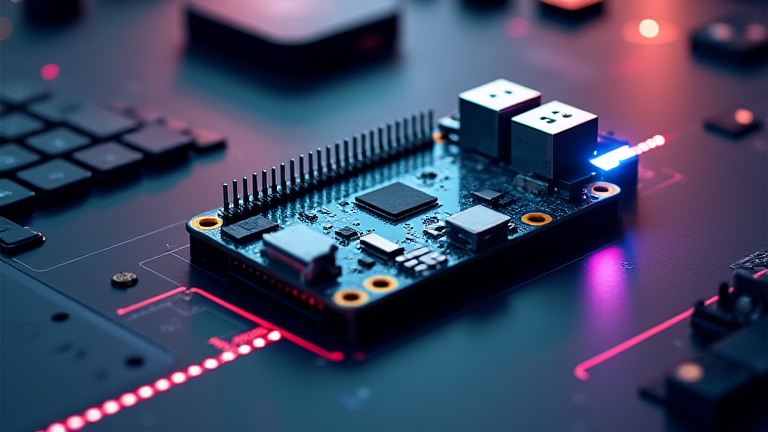
TL;DR: The Raspberry Pi 5 is the superior choice for general-purpose home automation and lightweight inference tasks due to its superior CPU performance, extensive software ecosystem, and lower cost. The Jetson Orin Nano remains the preferred option for complex, real-time computer vision and deep learning workloads where raw GPU acceleration is the primary bottleneck.
The Rise of Edge AI in the Household
The landscape of home AI has shifted dramatically in the last eighteen months. As large language models and computer vision algorithms become more accessible, hobbyists and tech enthusiasts are no longer satisfied with cloud-dependent solutions. They want privacy, low latency, and control. Two devices have emerged as the titans of this domain: the Raspberry Pi 5 and the NVIDIA Jetson Orin Nano. While both are compact, powerful, and capable of running sophisticated AI models, they serve different philosophical purposes. Understanding the distinctions between them is crucial for anyone looking to build a smart, responsive home hub.
Hardware Specifications and Performance
The Raspberry Pi 5, released in late 2023, represents a generational leap for the iconic single-board computer. It features a quad-core Arm Cortex-A76 CPU clocked at 2.4 GHz, which is significantly faster than its predecessor. While it lacks a dedicated GPU, its CPU performance is robust enough to handle real-time inference for object detection models like YOLOv8 at usable frame rates, especially when using quantized models. The inclusion of USB 3.0 and PCIe interfaces allows for easy expansion with NVMe storage, which is critical for loading large model weights quickly.
In contrast, the Jetson Orin Nano is designed explicitly for parallel processing. It packs an Ampere GPU with 1024 CUDA cores and 32 Tensor cores. This architecture is tailor-made for deep learning. While its CPU performance is decent, it is outclassed by the Pi 5 in standard computing tasks. However, for workloads involving video analytics, natural language processing, or multi-sensor fusion, the Orin Nano’s ability to process multiple streams simultaneously makes it indispensable. It offers up to 67 TOPS of AI performance, a figure the Pi 5 cannot match without significant latency penalties.
Industry Impact and Software Ecosystem
The industry impact of these devices is profound. The Raspberry Pi 5 has lowered the barrier to entry for AI development. Its massive community support means that finding libraries, tutorials, and pre-built images is effortless. This has led to a surge in “AI at the edge” projects, from smart doorbells to automated garden monitoring systems. The ease of use has democratized AI, allowing non-engineers to deploy intelligent systems in their homes.
The Jetson Orin Nano, conversely, is driving innovation in professional-grade edge computing. It is increasingly used in robotics, autonomous vehicles, and industrial inspection. For the home user, it offers a path to enterprise-grade performance. However, the steeper learning curve associated with NVIDIA’s JetPack SDK can be a deterrent. Despite this, the trend is clear: developers are beginning to hybridize setups, using a Pi for general orchestration and a Jetson for heavy lifting, or choosing the Jetson if the primary focus is pure computer vision.
FAQ
Q: Which device is easier for a beginner to set up?
A: The Raspberry Pi 5 is significantly easier due to its standard Linux environment and vast community support, whereas the Jetson requires more specialized knowledge of NVIDIA’s software stack.
If you want to dig deeper, check out our guide on Top 5 Viral TikTok Beauty Trends You Need to Try This Season.
Q: Can the Raspberry Pi 5 run large language models?
A: It can run small, quantized models locally, but performance will be slow compared to the Jetson Orin Nano, which is optimized for the parallel computations required by LLMs.
Q: What is the main power consumption difference?
A: The Jetson Orin Nano typically consumes more power, especially under load, making the Raspberry Pi 5 a more energy-efficient choice for always-on home automation tasks.
Leave a Reply