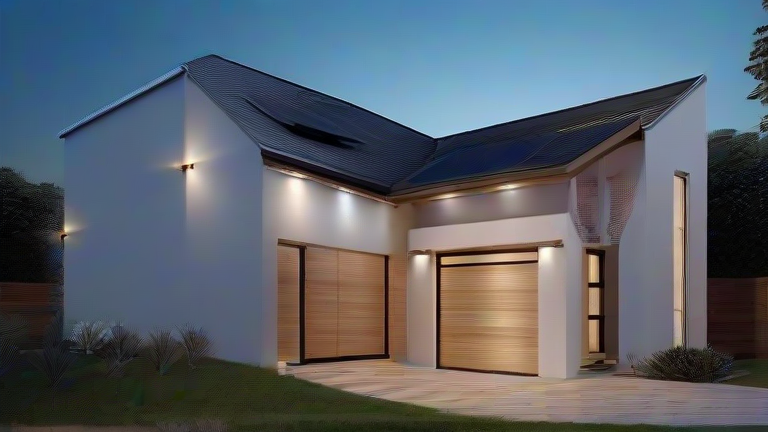
Smart Homes Prioritize Energy Resilience
The modern smart home has undergone a significant philosophical shift. No longer viewed merely as a playground for convenience—where lights dim with a voice command or coffee brews automatically—the connected household is rapidly evolving into a bastion of energy resilience. As global energy markets face volatility and climate change drives more frequent extreme weather events, homeowners and manufacturers alike are redefining what “smart” means. The new priority is no longer just automation, but autonomy and survival during outages.
Market data supports this transition unequivocally. According to recent reports from the International Energy Agency (IEA), residential energy storage systems are expected to see a compound annual growth rate of over 25% through 2030. This surge is driven by the integration of solar photovoltaics with home battery units, such as the Tesla Powerwall or LG Chem batteries. Furthermore, a study by the National Association of Home Builders indicates that 72% of homebuyers now consider energy efficiency and backup power capabilities as critical factors in their purchasing decisions, up from just 45% five years ago. This consumer demand is forcing smart home manufacturers to pivot their R&D focus toward grid-independent operation modes.
Expert insights highlight the technological convergence enabling this shift. Dr. Elena Ross, a senior analyst at TechFuture Insights, notes, “We are witnessing the maturation of the ‘virtual power plant’ concept at the residential level. Smart thermostats, EV chargers, and appliances are now communicating not just with the user, but with the grid. They can detect a frequency drop or an impending outage and automatically shed non-essential loads to preserve battery life for critical systems like medical devices and refrigeration.” This interoperability, often standardized through protocols like Matter, allows disparate devices to work in concert, creating a localized microgrid that can island itself from the main utility network.
Looking ahead, the prediction is clear: the smart home of the future will be an active participant in energy markets. We anticipate a rise in AI-driven energy management
Leave a Reply