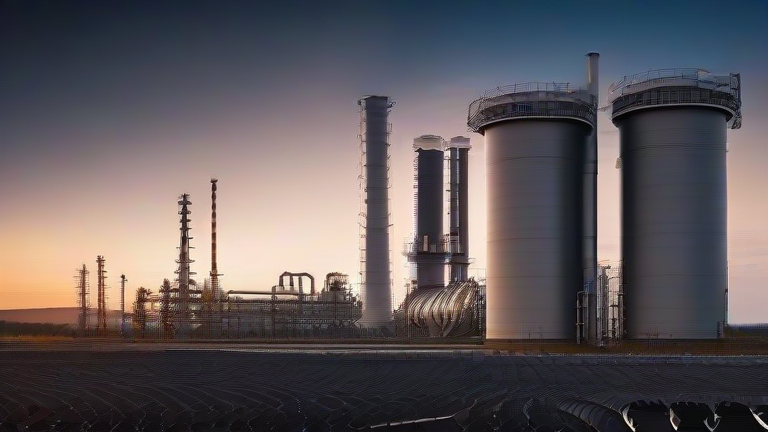
Scaling Up Carbon Capture Technology: What You Need to Know
The global race to achieve net-zero emissions has intensified significantly in recent years, placing carbon capture, utilization, and storage (CCUS) technologies at the forefront of industrial innovation. As governments and private sectors alike commit to ambitious climate goals, the demand for scalable solutions to remove carbon dioxide from the atmosphere has never been higher. This shift represents not just an environmental imperative but a massive economic opportunity, transforming how industries approach sustainability and operational efficiency.

Recent market analysis indicates that the global CCUS market is poised for exponential growth. Valued at approximately $3.5 billion in 2022, projections suggest the market could reach over $100 billion by 2050. This surge is driven by stringent regulatory frameworks in the European Union and North America, alongside voluntary corporate net-zero pledges. Major players in the energy, cement, and steel sectors are increasingly integrating CCUS into their operational models to mitigate emissions that are otherwise difficult to abate. The economic viability of these projects is improving as carbon pricing mechanisms become more widespread and consistent across international borders.
If you want to dig deeper, check out our guide on 10 Proven Business Strategies to Scale Your Company in 2024.
Expert Insights on Technological Breakthroughs
Industry experts emphasize that technological advancements are key to reducing the high costs associated with carbon capture. Dr. Elena Rossi, a leading researcher in sustainable engineering, notes, “Direct air capture technologies are becoming more energy-efficient, lowering the barrier to entry for widespread implementation. We are seeing a shift from pilot projects to commercial-scale deployments, which is crucial for driving down costs through economies of scale.”
Furthermore, the integration of artificial intelligence and machine learning is optimizing capture processes. These technologies allow for real-time monitoring and adjustment of capture systems, ensuring maximum efficiency and minimal energy consumption. This digital transformation is essential for making CCUS competitive with traditional fossil fuel extraction methods without compromising environmental integrity.
Future Predictions and Challenges
Looking ahead, the next decade will likely see the establishment of comprehensive carbon transport and storage networks. These infrastructures will connect emission sources with suitable geological storage sites, facilitating the safe and long-term sequestration of captured carbon
Leave a Reply