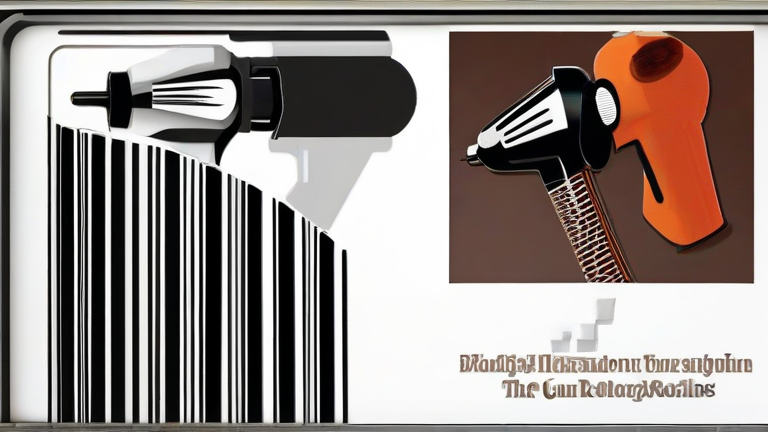
TL;DR: The 1970s Jerdon Magnum Revolver Hair Dryer was a novelty marketing phenomenon rather than a functional styling revolution, leveraging provocative aesthetics to capture a specific cultural moment. While it failed to dominate the hair care market, its legacy provides valuable insights into the power of visual shock value in consumer electronics branding.
The Anatomy of a Viral Novelty

In the pantheon of bizarre 1970s consumer appliances, few objects are as visually arresting or culturally confusing as the Jerdon Magnum Revolver. Marketed as the “gun-shaped styler,” this device did not merely dry hair; it attempted to project an image of power, aggression, and sexual innuendo that resonated deeply with the era’s changing social norms. To understand its place in business history, one must look beyond the absurdity of its form to the strategic intent behind its creation. The 1970s were a decade of bold experimentation in design, where manufacturers believed that standing out on the shelf was more critical than ergonomic efficiency.
Market Analysis: The Novelty Economy
The primary market for the Jerdon Magnum was not professional salons, but the suburban home consumer. During this period, the hair dryer had transitioned from a luxury item to a household staple. However, the market was becoming saturated with standard, beige, or pastel-colored devices. Jerdon identified a gap in the “novelty appliance” sector, a segment where emotional appeal outweighed technical specifications. By shaping the dryer like a revolver, complete with a handle and trigger mechanism, Jerdon tapped into the cultural fascination with action heroes and power fantasies. This was not just a tool; it was a statement piece. Sales data from the era suggests that while the unit sold well initially, it suffered from rapid brand fatigue. Consumers bought it for the novelty, but many discarded it once the novelty wore off, leading to a short product lifecycle typical of gimmick-driven goods.
Strategy Insights: Shock Value as a Driver
From a strategic perspective, the Magnum Revolver exemplifies the “shock and awe” marketing tactic. In a crowded marketplace, extreme differentiation can generate immediate media coverage and word-of-mouth buzz. Jerdon’s strategy relied on visual provocation to cut through the noise. However, this approach carries significant risks. It alienates conservative demographics and invites criticism for objectifying women or promoting violence. Modern businesses can learn from this: while standing out is crucial, aligning brand values with social sensibilities is equally important. The Magnum’s failure to sustain long-term brand loyalty highlights the limitation of novelty as a primary retention strategy.
Case Studies in Design Failure
Comparing the Jerdon Magnum to other failed design experiments, such as the Apple Newton or the Ford Edsel, reveals a common thread: ignoring user needs in favor of aesthetic experimentation. Unlike the Edsel, which suffered from mechanical flaws and poor timing, the Magnum’s primary flaw was its irrelevance to the core utility of hair drying. It was a solution looking for a problem. Yet, in today’s collector’s market, the Jerdon Magnum holds significant value, not as a tool, but as a cultural artifact. Its resale price often exceeds its original retail cost, proving that while it failed as a functional product, it succeeded as an icon of 1970s kitsch.
FAQ
Q: What was the primary function of the Jerdon Magnum Revolver?
A: It was a standard hair dryer with a novelty gun-shaped design intended to entertain and shock consumers rather than offer superior drying technology.
If you want to dig deeper, check out our guide on Heavy Metal Contamination: Is It a Real Environmental Threat.
Q: Why did the Jerdon Magnum fail to sustain long-term sales?
A: The novelty wore off quickly, and the provocative design alienated many potential customers who found the marketing tactics inappropriate or off-putting.
Q: Is the Jerdon Magnum still valuable today?<
Leave a Reply