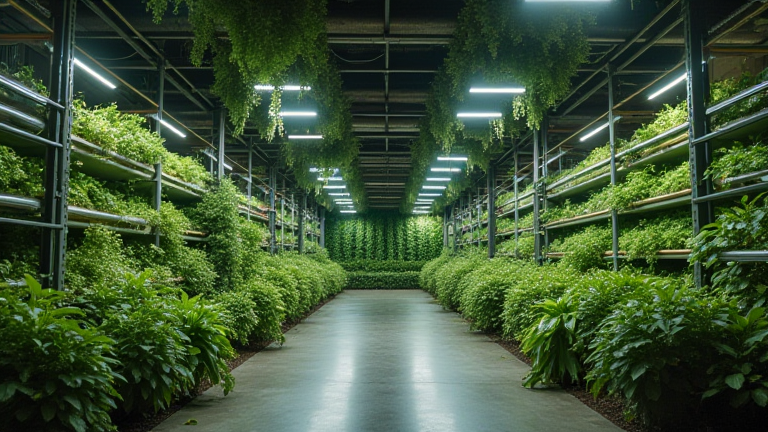
TL;DR: Vertical farming drastically reduces urban food miles by locating production directly within city limits, thereby minimizing transportation emissions and spoilage. This localized approach significantly boosts sustainability by optimizing water usage and eliminating the need for harmful agricultural pesticides.
The Rise of Hyper-Local Agriculture
In an era defined by climate urgency and supply chain volatility, vertical farming has emerged as a revolutionary solution for urban food security. By stacking crops in controlled environments, these facilities decouple food production from traditional agricultural constraints. This method not only saves land but also slashes the distance food travels from farm to plate. The result is a dramatic reduction in carbon footprints associated with logistics. Cities are now transforming abandoned warehouses and skyscrapers into lush, green hubs of productivity. This shift represents a fundamental change in how metropolitan areas sustain their populations.
If you want to dig deeper, check out our guide on Solid-State Batteries Hit Consumer EV Mass Production.
Latest Technological Developments and Specs
Recent advancements in LED lighting and AI-driven climate control have pushed efficiency to new heights. Modern systems utilize narrow-spectrum LEDs that target specific photosynthetic needs, reducing energy consumption by up to thirty percent compared to older models. Automated hydroponic and aeroponic systems circulate nutrient-rich water with precision, using ninety-five percent less water than conventional farming. Sensors monitor humidity, temperature, and CO2 levels in real-time, allowing algorithms to adjust conditions instantly for optimal growth. These specs ensure consistent yields year-round, regardless of external weather patterns. The integration of robotics for planting and harvesting further streamlines operations, reducing labor costs and human error. Such technological sophistication makes vertical farming increasingly viable for commercial scale.

Industry Impact and Future Outlook
The industry impact extends beyond environmental benefits. Local production stabilizes food prices by reducing dependency on global shipping networks. Investors are pouring billions into the sector, recognizing its potential to redefine urban infrastructure. Major supermarket chains are partnering with vertical farms to offer fresh, local produce with extended shelf life. This collaboration enhances consumer trust and promotes healthier eating habits. As technology matures, costs will decrease, making sustainable produce accessible to broader demographics. The future of agriculture is not just about growing more food; it is about growing it smarter, closer, and cleaner. Vertical farming stands at the forefront of this green revolution, promising a resilient and sustainable urban food system for generations to come.
FAQ
Q: How much water does vertical farming use compared to traditional farming?
A: Vertical farming uses approximately ninety-five percent less water because it recycles water in closed-loop systems.
Q: Can vertical farming produce staple crops like wheat and rice?
A: Currently, it is most economically viable for leafy greens and herbs, though research is ongoing for staple crops.
Q: What is the primary energy source for most vertical farms?
A: Most rely on grid electricity, but many are transitioning to renewable sources like solar and wind to improve sustainability.
Leave a Reply