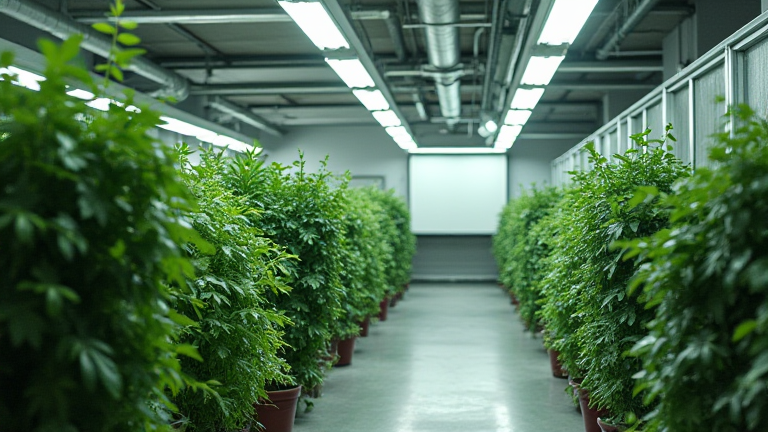
Vertical Farming: Expanding Urban Food Supply & Sustainability
The agricultural landscape is undergoing a profound transformation, driven by the urgent need to address climate change, urbanization, and food security. As global populations surge toward nine billion by 2050, traditional farming methods—reliant on vast tracts of arable land and significant water resources—are proving increasingly unsustainable. Enter vertical farming: a revolutionary approach that stacks crops in vertically inclined layers, often incorporating controlled-environment agriculture (CEA) technology. This method not only maximizes yield per square foot but also drastically reduces the environmental footprint of food production, positioning itself as a cornerstone of sustainable urban development.
Market Analysis: A Booming Sector
The economic viability of vertical farming has shifted from speculative interest to robust market reality. Recent market analysis indicates that the global vertical farming market is projected to grow at a compound annual growth rate (CAGR) of over 25% through 2030. This surge is fueled by several key factors: the rising cost of land in metropolitan areas, increasing consumer demand for locally sourced and pesticide-free produce, and technological advancements that have lowered energy consumption costs. Investors are increasingly recognizing that vertical farms are not just niche experiments but scalable businesses capable of integrating seamlessly into supply chains. Furthermore, governments worldwide are offering grants and incentives to encourage sustainable agricultural practices, further stimulating market expansion.
If you want to dig deeper, check out our guide on Top 10 Tech Trends Shaping the Future in 2024.
Strategic Insights: Beyond the Greenhouse
Success in this sector requires more than just planting seeds in stacked trays. Strategic insights reveal that profitability hinges on crop selection and energy efficiency. Leafy greens, herbs, and microgreens remain the most profitable crops due to their short growth cycles and high market value. However, the future lies in expanding to higher-value fruits and vegetables, such as strawberries and tomatoes, which require more sophisticated lighting and climate control systems. Energy management is the critical bottleneck; innovations in LED lighting and AI-driven climate control are essential to reducing operational costs. Moreover, strategic partnerships with local restaurants, grocery chains, and direct-to-consumer platforms are vital for minimizing logistics costs and ensuring freshness, thereby enhancing brand loyalty.
Case Studies: Leaders in the Field
Real-world examples demonstrate the potential and challenges of this industry. AeroFarms, based in New Jersey, operates one of the world
Leave a Reply