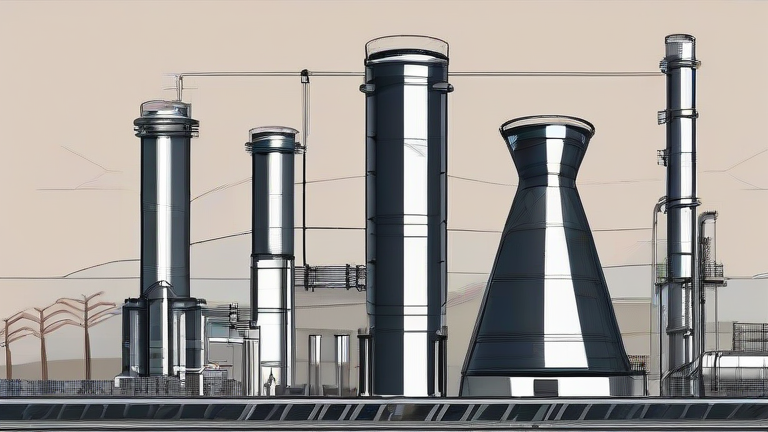
Carbon Capture Becomes Profitable at Scale
For over a decade, carbon capture, utilization, and storage (CCUS) has been viewed as a necessary but costly burden for heavy industry. However, a significant economic inflection point has been reached in 2024. Driven by aggressive policy incentives, technological maturation, and the emergence of secondary revenue streams, direct air capture and point-source capture are no longer just environmental mandates—they are viable profit centers. The narrative has shifted from “cost of compliance” to “asset optimization,” fundamentally altering the business case for decarbonization.
Market Dynamics and Economic Drivers
The primary catalyst for this shift is the United States’ 45Q tax credit, which has been significantly expanded by the Inflation Reduction Act. Credits now offer up to $85 per ton for direct air capture and $50 per ton for industrial point-source capture, provided the carbon is permanently stored or utilized. This financial backbone has de-risked capital expenditure for early movers. Simultaneously, the European Union’s Carbon Border Adjustment Mechanism (CBAM) is forcing global manufacturers to account for embedded emissions, creating a mandatory market for low-carbon steel, cement, and chemicals.
If you want to dig deeper, check out our guide on Neuroadaptive Interfaces: Replacing Traditional Screens.
Moreover, the cost of capture has dropped by approximately 40% since 2015 due to advancements in solvent chemistry and modular capture units. These efficiencies, combined with rising carbon prices in the EU and UK markets, have narrowed the gap between fossil-based and low-carbon production costs. Investors are increasingly viewing CCUS infrastructure not as speculative green tech, but as stable, infrastructure-grade assets with predictable returns.
Strategic Insights for Industry Leaders

Success in this new landscape requires a dual-track strategy. First, companies must integrate capture technologies directly into their core production processes to minimize energy penalties. Second, they must diversify revenue beyond tax credits. This includes selling captured CO2 for enhanced oil recovery (EOR) in regions with mature oil fields, or for use in synthetic
Leave a Reply