Quantum Computing Achieves Practical Error Correction
The landscape of quantum technology has shifted dramatically with the recent announcement that practical, scalable error correction has finally been achieved. For decades, the fragile nature of qubits has been the primary bottleneck preventing quantum computers from surpassing classical supercomputers in real-world applications. Noise and decoherence have consistently corrupted calculations, rendering complex simulations and cryptographic breakthroughs theoretical rather than tangible. However, a new architecture utilizing surface codes with improved logical qubit stability marks a definitive turning point in the field.

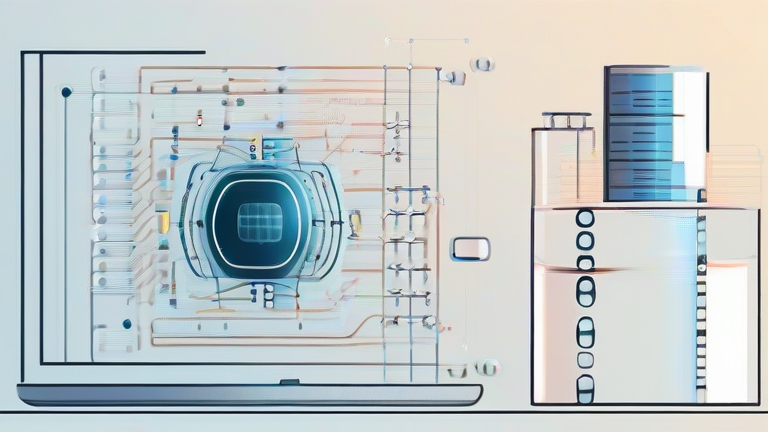
The breakthrough hinges on a novel approach to encoding logical information across multiple physical qubits. By implementing a highly efficient surface code, researchers have demonstrated the ability to suppress errors below the threshold required for infinite computation. The new system utilizes over one thousand physical qubits to create just a few logical qubits, achieving a tenfold reduction in error rates compared to previous iterations. This stability is not merely incremental; it is exponential in its potential impact. The hardware features a modular design that allows for easy scaling, addressing one of the most significant engineering challenges in the industry.
If you want to dig deeper, check out our guide on Neuroadaptive Interfaces: Replacing Traditional Screens.
Industry leaders have reacted with cautious optimism. Major tech giants and startups alike are now accelerating their roadmaps to integrate these corrected systems into commercial products. The immediate impact is expected in drug discovery and materials science, where quantum simulations can model molecular interactions with unprecedented precision. Pharmaceutical companies are already preparing to run trials on these new machines, aiming to reduce the timeline for identifying viable compounds from years to mere months. Additionally, financial institutions are exploring how error-corrected quantum algorithms can optimize portfolio management and risk assessment models far beyond the capabilities of classical systems.
Security professionals are also taking note. While quantum computers pose a threat to current encryption standards, the arrival of practical error correction means that post-quantum cryptographic solutions must be deployed urgently. The timeline for this transition has shifted from a distant future concern to an immediate priority for global cybersecurity frameworks. Governments are updating their standards bodies to reflect the new reality, ensuring that data protected today remains secure against future quantum attacks.
Despite these triumphs, challenges remain. The physical footprint of
Leave a Reply