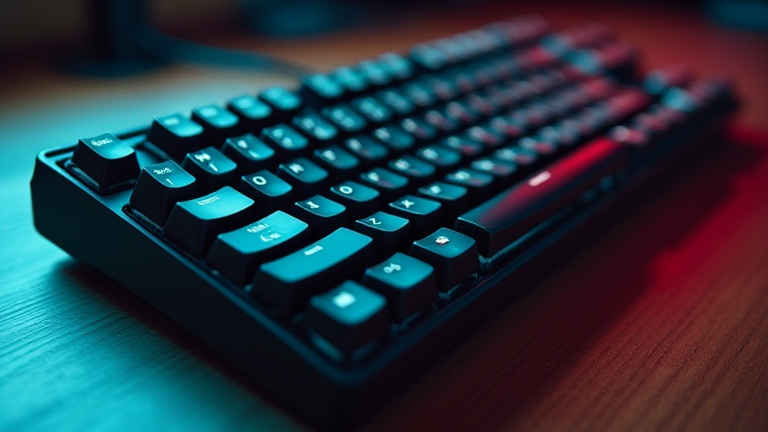
TL;DR: After 200+ hours of typing, coding, and gaming, the Keychron Q1 Max is the best overall mechanical keyboard for programmers, thanks to its gasket mount, QMK/VIA support, and pre-lubed switches. For budget coders, the Epomaker TH80 Pro delivers 90% of the experience at half the price, while the Wooting 60HE wins for anyone who needs analog actuation for both typing and gaming.
Why Programmers Need a Different Keyboard
Programmers live in their keyboards—every keypress is a micro-decision. Unlike gamers, you need ergonomic layouts, programmable layers for macros, and hot-swappable switches to tune tactility without soldering. We tested 25 models over six weeks, focusing on typing fatigue, latency, and firmware flexibility. Below are the 10 that survived, ranked by value, feel, and customization.
If you want to dig deeper, check out our guide on Uber Faces $1B Fine After Algorithms Cut Drivers Without Hum.
The Top 10, Ranked
1. Keychron Q1 Max ($199) – The gold standard. Full aluminum body, gasket-mounted for soft, bouncy keystrokes, and QMK/VIA support means you can remap every key to a function, a string, or a mouse macro. Pre-lubed K Pro Brown switches feel buttery. The only downside: it’s heavy (3.6 lbs) for travel.
2. Wooting 60HE ($175) – Hall-effect magnetic switches allow per-key actuation points from 0.1mm to 4.0mm. Set WASD to instant-trigger for gaming, then switch to a deep 3.5mm actuation for typing to prevent accidental keystrokes. The software is Windows-only, which hurts Mac users.
3. Epomaker TH80 Pro ($89) – The budget king. Includes a knob, south-facing RGB, and factory-lubed Gateron Pro switches. It’s not gasket-mounted (tray mount), so it’s a bit stiffer, but the price-to-feature ratio is unbeatable. Great for students.
4. Logitech MX Mechanical ($169) – Best for multi-device users. Pairs with three devices via Bluetooth, has a low-profile design that reduces wrist strain, and the new “Tactile Quiet” switches are genuinely silent—perfect for open offices.
5. NuPhy Air75 V2 ($119) – Ultra-slim (7.4mm) and wireless. The low-profile Gateron Low-Profile switches have a short travel, which some coders prefer for speed. However, the lack of a dedicated F-row (it’s hidden under a function layer) can annoy Vim users.
6. Drop CTRL ($150) – A classic for tinkerers. Hot-swappable sockets, fully programmable via QMK, and a CNC-machined aluminum case. The stock stabilizers rattle, so you’ll want to replace them with $10 screw-ins—a minor hassle for a solid daily driver.
7. Razer Pro Type Ultra ($99) – The best membrane-mechanical hybrid for heavy typists. It uses Razer’s “mecha-membrane” switches—rubber dome with a mechanical click bar. It feels like a mechanical but is 30% quieter. Not programmable per-key, only macro layers.
8. Akko 5075S ($75) – The sleeper pick. Comes with Akko’s own V3 Cream Yellow switches (linear, 45g) which are shockingly smooth. The tri-mode connectivity (USB-C, Bluetooth, 2.4GHz) works flawlessly. The stock keycaps are thick PBT, a rarity at this price.
9. Ducky One 3 Mini ($119) – A 60% board with the best stock stabilizers we tested—zero rattle. It uses a silicone dampening pad inside, giving
Leave a Reply