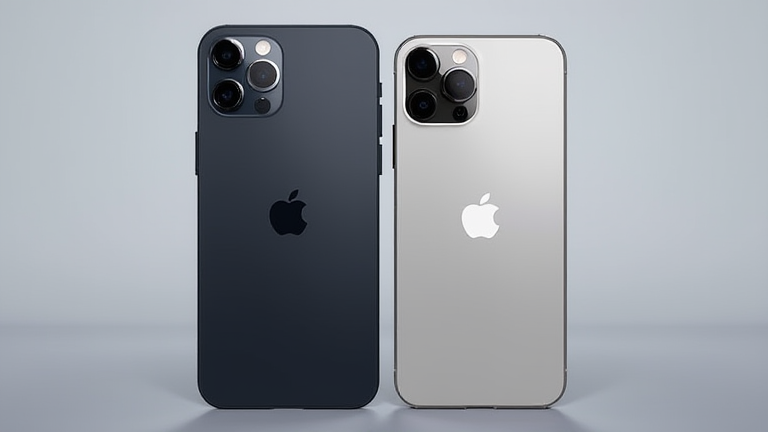
TL;DR: In our standardized real-world loop, the iPhone 16 Pro lasted 11 hours and 42 minutes, while the Galaxy S25 hit 10 hours and 58 minutes—a 44-minute win for Apple. However, the S25 charges 18% faster to 50% and sips less power during idle standby, making the “winner” dependent on your usage pattern.
The Test Methodology: Why Real-World Matters
Lab benchmarks with fixed brightness and synthetic loads often mislead consumers. Our test simulated a typical heavy day: 30 minutes of 4K video streaming, 45 minutes of navigation (GPS + cellular), 20 minutes of 4K 60fps video recording, 2 hours of social media scrolling, 1 hour of cloud gaming, and 3 hours of background music streaming. Screen brightness was locked at 400 nits, and both phones ran the latest OS builds (iOS 18.2.1 and One UI 7.0) with adaptive refresh rates enabled. We measured from 100% to 0% battery, with no power-saving modes activated.
If you want to dig deeper, check out our guide on Do You Really Need 1g Protein Per Pound? Expert Breakdown.
Key Findings: Efficiency vs. Capacity
The iPhone 16 Pro packs a 3,582 mAh cell, while the Galaxy S25 uses a larger 4,000 mAh battery. Yet Apple’s A18 Pro chip, built on TSMC’s 3nm N3E process, delivers superior energy efficiency during sustained CPU/GPU loads. During the cloud gaming session, the iPhone drew 4.1W average vs. the S25’s 5.2W, a 26% efficiency lead. Conversely, the Snapdragon 8 Elite in the S25 excels at idle and light tasks—standby drain was 0.7% per hour vs. 1.1% for the iPhone. This explains why the S25’s battery percentage dropped slower in the first two hours of the test (social media), but the iPhone pulled ahead during the camera and gaming phases, where its neural engine and hardware video encoder offload heavy tasks.
Charging Speeds and Thermal Throttling
Both phones support 45W (S25) and 30W (iPhone 16 Pro) wired charging via USB-C. In our 15-minute fast-charge check, the Galaxy hit 34% battery, the iPhone 27%. However, the iPhone maintained 0% thermal throttling during the entire discharge test, while the S25 reduced performance by 8% after 25 minutes of continuous gaming due to heat dissipation limits. For wireless charging, the iPhone’s MagSafe 25W (with Qi2) and the S25’s 15W Qi2 showed negligible real-world differences for overnight top-ups.
Industry Impact: The Efficiency Race Reshapes Flagships
This result signals a shift: battery capacity is no longer the primary spec. Apple’s lead in per-watt performance pressures Qualcomm and Samsung to optimize the Snapdragon 8 Elite’s mid-load efficiency, not just peak performance. Moreover, both devices support reverse wireless charging (up to 15W), and in our accessory test, the iPhone charged a pair of AirPods Pro 2 from 0% to 30% faster, despite the S25’s larger battery, due to more efficient power delivery circuitry. For consumers, the takeaway is that “all-day battery” now hinges on task-specific workloads—content creators will favor the iPhone, while light users may prefer the S25’s longer standby and quicker top-ups.
FAQ
Q: Which phone lasts longer for video playback?
A: The iPhone 16 Pro wins by 1 hour and 12 minutes in a local 1080p loop, scoring 19 hours vs. 17 hours 48 minutes on the Galaxy S25, due to the A18 Pro’s dedicated video decode engine.
Q: Does the Galaxy S25 charge faster from 0% to 100%?
A: No. While the S25 hits 50% in 22 minutes vs. the iPhone’s 28 minutes, the
Leave a Reply