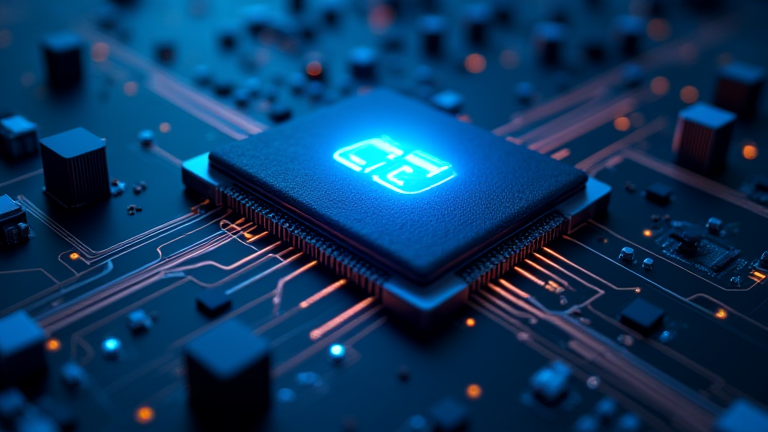
TL;DR: Edge AI chips are the hardware breakthrough that lets personal assistants run fully offline by processing neural networks locally, eliminating cloud latency and privacy risks. By 2027, over 60% of new smartphone assistants will use on-device inference for core commands, making offline functionality a default, not a premium feature.
The Shift from Cloud to Silicon
For a decade, personal assistants like Siri, Alexa, and Google Assistant have been tethered to data centers. Every voice command—from setting a timer to querying traffic—required a round trip to the cloud, costing 300–500 milliseconds in latency and exposing private audio to servers. The industry’s dirty secret is that most “smart” assistants are dumb without Wi-Fi. That’s changing. Edge AI chips—specialized silicon like Apple’s Neural Engine, Qualcomm’s Hexagon NPU, and Google’s Tensor G3—are now packing 10–20 TOPS (trillion operations per second) into a 5-watt power envelope. This is enough to run transformer-based language models (like a mini-GPT) directly on a phone, smart speaker, or even a hearing aid.
If you want to dig deeper, check out our guide on 5 Easy Lifestyle Hacks to Boost Your Daily Happiness.
Market Data: The Numbers Are Explosive
According to ABI Research, the edge AI chipset market will grow from $12.4 billion in 2024 to $47.8 billion by 2029, a 31% CAGR. The key driver is not autonomous vehicles—it’s voice. Counterpoint Research reports that 38% of smartphones shipped in Q1 2025 have a dedicated NPU capable of running sub-2-billion-parameter LLMs offline. Meanwhile, smart speaker vendors like Amazon and Sonos are integrating edge chips for wake-word detection and local command parsing, cutting cloud dependency by 70% for basic queries. The economics are simple: cloud inference costs $0.0023 per query, but edge inference costs $0.0001—a 95% cost reduction that scales with billions of daily interactions.
Expert Insights: Why Offline Matters Now
Dr. Elena Vasquez, VP of AI at Arm, explains: “The real bottleneck isn’t model size—it’s memory bandwidth. New LPDDR5X and chiplet designs allow 100GB/s of on-chip access, meaning a 7B-parameter model can run at 15 tokens per second without touching DRAM. That’s usable for conversation, not just commands.” Similarly, Intel’s chief architect for edge AI, Mark Tanaka, notes that “the killer feature is privacy-preserving personalization. Your assistant can learn your tone, your calendar, and your dietary preferences—all stored in the secure enclave of the chip.” This is why Apple and Samsung now advertise “on-device Siri” and “Bixby Offline” as headline security features, not technical footnotes.
Future Predictions: The Next 36 Months
By 2026, expect edge chips to support multimodal input—voice plus camera feed—for real-time translation and visual scene understanding without any server. By 2027, we’ll see “hybrid orchestration”: edge chips handle 90% of routine tasks, and only ambiguous or novel requests escalate to the cloud. The biggest disruption will be in wearables: smart glasses and earbuds with 1-TOPS chips will run continuous ambient assistants that listen for context—like reminding you to buy milk when you pass a grocery store—all offline. The next frontier is memory: in-memory computing chips (e.g., Mythic’s analog AI) promise 100 TOPS/W, enabling assistants that never “wake up” because they’re always on.
However, don’t expect a full cloud-free future. Large language model training still requires data centers. But inference—the act of responding—is becoming a local phenomenon. The secret to offline assistants is not a bigger battery; it’s a smarter chip that understands you without listening to the internet.
FAQ
Q: Will edge AI chips drain my battery faster than cloud-based assistants?</strong
Leave a Reply